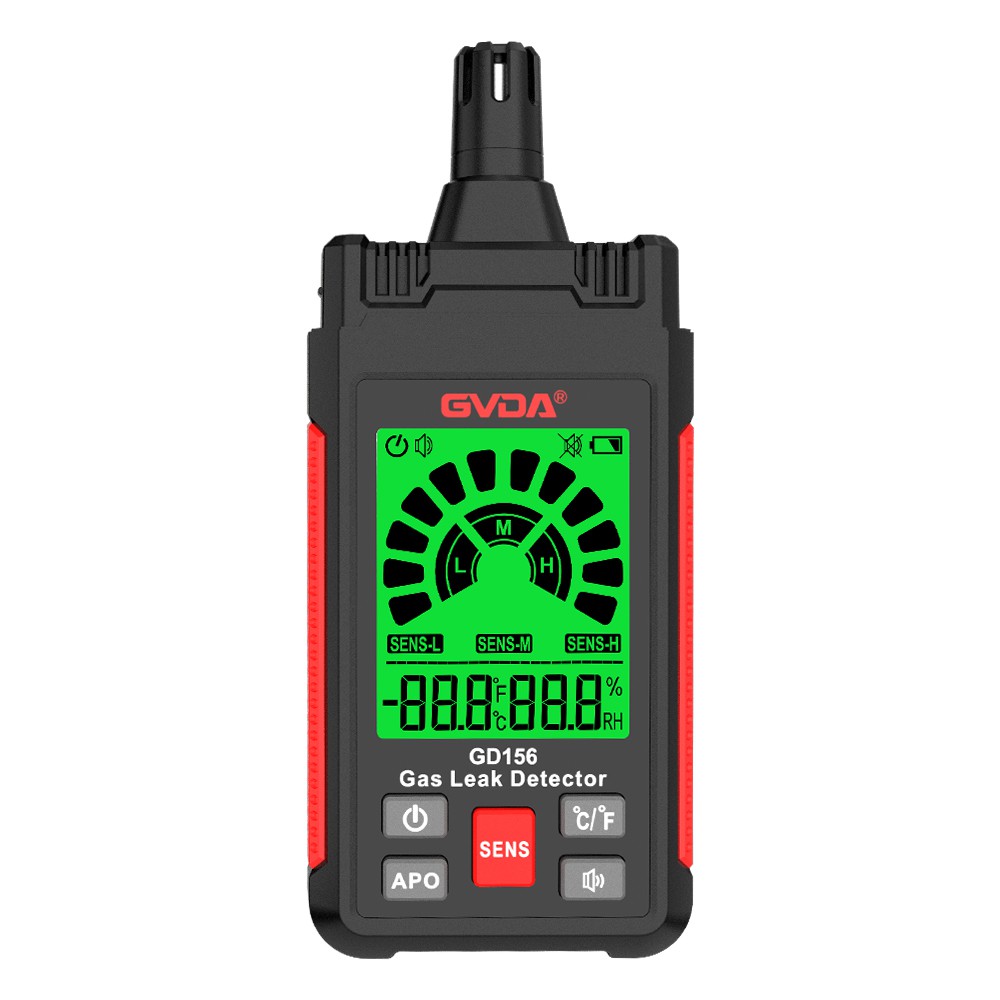
What are the functions and roles of a combustible gas detector?
Fuel gas detector is a commonly used gas detection tool, mainly used to detect the concentration of combustible gases in the air, such as natural gas, liquefied petroleum gas, methane, propane, ethane, etc., in order to detect and prevent early fire and explosion incidents. Blue Moon Measurement and Control will provide a detailed introduction to the functions and application scenarios of combustible gas detectors.
1,Functions of combustible gas detector
1.1 Detection of gas concentration
Combustible gas detectors can measure the concentration of combustible gases in the air, usually expressed as a percentage volume or parts per million (ppm). When the concentration of combustible gas exceeds a certain threshold, the detector emits an alarm to alert the operator of the danger.
1.2 Monitoring the environment
The combustible gas detector can monitor the concentration of combustible gases in the environment in real time and record historical data for subsequent analysis and processing. This is essential for monitoring safety in certain situations, such as oil fields, chemical plants, natural gas filling stations, etc.
1.3 Fire and explosion prevention
Combustible gas detectors can detect abnormal concentrations of combustible gases in the air early, providing warnings for operators to take timely measures to prevent fire and explosion accidents. For example, in accidents such as gas poisoning, gas leaks and oil and gas explosions, combustible gas detectors can provide accurate concentration data for rescue personnel, helping them to judge correctly.
The combustible gas detector can be applied in many fields. Below, Blue Moon Detection will take you to see its specific applications:
1. Industrial field: combustible gas detectors can be applied in industries such as petrochemicals, coal mines and chemical engineering to monitor fuel gas losses and ensure the safety of workers and equipment.
2.In the field of architecture, combustible gas detectors can be applied to residential, commercial and public buildings to detect losses of combustible gases such as natural gas and coal gas, thus improving the safety of buildings.
3. Mining field: Combustible gas detectors can be applied in coal mines and metal mines to monitor fuel gas leaks and prevent mine explosion accidents.
4.In aviation, combustible gas detectors can be applied to aircraft and airports to monitor aviation fuel loss and ensure the safety of passengers and crew members.
5.In the automotive industry, combustible gas detectors can be applied to monitor fuel losses such as liquefied petroleum gas and natural gas in vehicles, ensuring the safety of drivers and passengers.