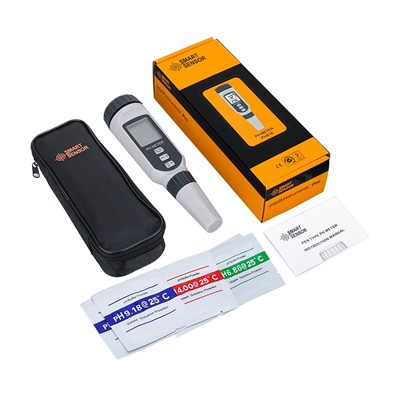
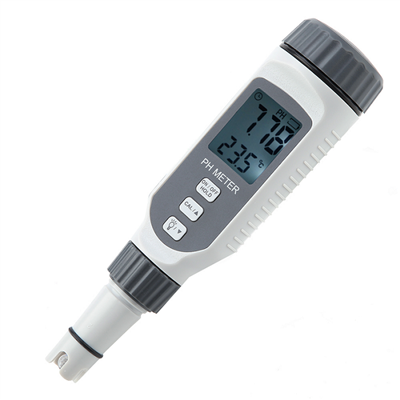
What are the main performance indicators of measuring instruments
(1) Accuracy: also known as degree, that is, how accurate the measurement result of the instrument is close to the real value. Can be expressed in terms of error or relative error:
① Error = measured value - real value
② Relative error = error / true value
Any instrument cannot accurately measure the real value of the measured parameter, only to make the measured value close to the real value. In practical applications, the indicated value of the standard instrument with high accuracy can only be used as the true value of the measured parameter, and the difference between the indicated value of the measuring instrument and the indicated value of the standard instrument is the measurement error. The smaller the error value, the higher the reliability of the measuring instrument.
(2) Reproducibility: refers to the percentage of the difference between each measured value and the average value relative to the large scale range when the same instrument is used to repeatedly measure a parameter under the condition of constant measurement conditions. This is an important indicator of the stability of instruments and instruments, and generally needs to be inspected during commissioning and daily calibration.
(3) Sensitivity: refers to the sensitivity of instrument measurement. It is often expressed as the ratio of the variation of the instrument output to the variation of the measured parameter that causes the change.
(4) Response time: When the measured parameter changes, the measured value indicated by the instrument will always take a period of time to be accurately expressed, and the lag time between this period and the change of the measured parameter is the reaction time of the instrument. Some are represented by time constants (such as thermal resistance temperature measurement), and some are represented by damping time (such as ammeter resistance measurement).
(5) Zero point drift and range drift: refers to the percentage of the average change value relative to the range after repeated measurements of the relative zero point and large range confirmed by the instrument.