What are the maintenance methods of TV switching power supply
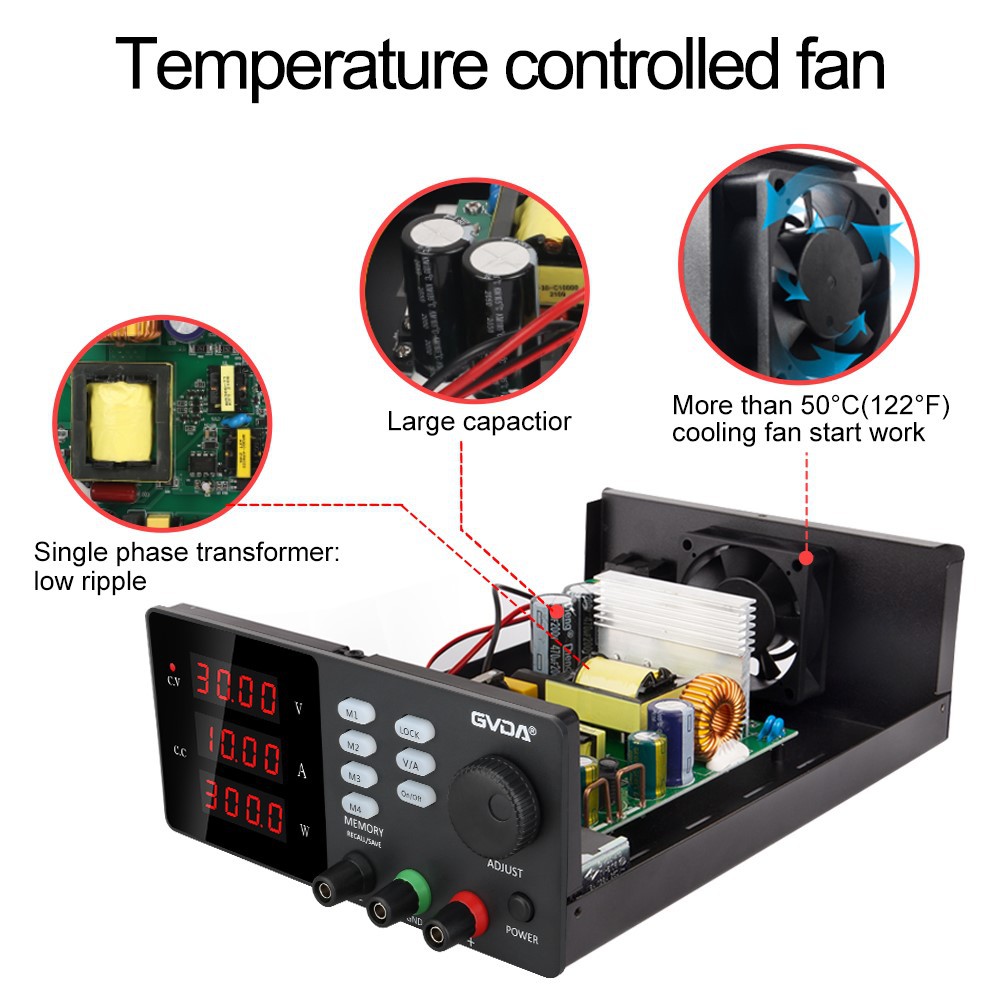
When repairing switching power supplies, in order to distinguish whether the fault is in the load circuit or the power supply itself, it is often necessary to disconnect the load and add a dummy load to the output of the power supply (usually 5V, 12V or 24V) for test run. The purpose of connecting the dummy load is because the energy stored in the primary winding of the switching transformer is released to the secondary side during the cut-off period of the switching tube. If the dummy load is not connected, the energy stored in the switching transformer has nowhere to be released, which can easily lead to breakdown and damage of the switching tube. . Generally, a 30-60W/12V light bulb (used on a car or a motorcycle) is selected as a dummy load. In order to reduce the starting current, a 30W electric soldering iron can also be used as a dummy load or a high-power 600Ω~1kΩ resistor.
The maintenance of the switching power supply board generally starts from the primary level:
1. When repairing the LCD power supply, first confirm the status of the fuse, the fuse is intact, and usually the switch tube in the PFC correction circuit is not invalid. Then measure whether there is a short circuit between the large electrolytic capacitor and the ground. If there is a charging resistance of more than tens of kiloohms, it indicates that the power supply has not broken down. If the fuse is damaged, the first one is to check the switch tube of the PFC correction circuit, and the second one is to check the auxiliary power supply IC.
2. After the LCD power supply is powered on, the auxiliary power supply will work first and output +5V voltage to the CPU on the digital board. At this time, the whole machine is in standby state. When the "Standby" button is pressed, the CPU outputs the power-on level, and the PFC circuit works first to convert the +300V pulsating DC voltage into a normal DC voltage (+380V), then the pulse width oscillator of the main switching power supply starts to work , and then the secondary output of the main switch transformer is +12V, +24V voltage, and the whole machine enters the normal working state.
2. The PFC circuit is to raise the voltage of +300V rectified by the bridge stack to +375V----+400V. This is also the first point of difference between the power supply of LCD TV and the power supply of CRT TV. The second point is that the secondary voltage is lower than that of CRT, and the principle of other places is the same as that of ordinary switching power supply. The measured voltage across the large filter capacitor 330U/450V is +375V---+400V, indicating that the power factor correction circuit is working normally; if the measured voltage across the capacitor is +300V, it indicates that the PFC circuit is not working, check the PFC oscillation integration circuit and the main filter capacitor.
3. Generally output three sets of voltages of +5V, +12V, +24V for the ones below 40 inches; four sets of voltages of +5V, +12V, +18V, +24 V for the ones above 40 inches. Among them, +5 V is the standby voltage, +12 V is for the digital board, +18 V is for the audio, and +24 V is for the backlight board. In actual maintenance, as long as each group of power boards with the same voltage and power can be replaced.
5. The power supply board can be removed from the TV for independent maintenance. During maintenance, it is only necessary to short-circuit the transistors C and E of the switch control circuit (or connect a resistor of about 1.5K to the +5V output terminal of the auxiliary power supply), and the whole The machine is in the power-on state, and each voltage has output. In the switching power supply of some LCD color TVs, only the +12V or +24V output terminal has a certain power load, and the main switching power supply can work normally. So you can connect a 36 V light bulb of an electric bicycle as a dummy load to the +24 V output (or connect a motorcycle light bulb to the +12 V output as a dummy load).
6. Protection circuit. In the liquid crystal color TV switching power supply, in addition to the common peak absorption protection circuit, there are also overvoltage and overload protection circuits at +24V, +12V and +5V voltages. The protection circuit mostly uses four operational amplifiers. LM324, quad voltage comparator LM339, dual voltage comparator LM393 or dual op amp LM358. The over-current and over-voltage protection circuit can be disengaged during maintenance. If the voltage returns to normal, it means that the protection circuit is caused. At this time, it is necessary to disconnect which circuit works step by step. Then make repairs.
7. The output current of the main switch voltage +24V or +12V is relatively large, and the requirements for rectifier diodes are relatively high. Generally, high-power Schottky diodes with low dropout voltage are used, and ordinary rectifier diodes cannot be replaced. In addition, after the load is connected, the voltage rises instead, which is mostly caused by poor power filtering.
8. The load capacity of the power supply is poor. First, check whether the PFC voltage is normal (380 v). If it is normal, the problem lies in the thick film of the power supply. Usually it is caused by the poor load capacity of the thick film of the power supply. Please pay attention to this.