What are the reasons why the multimeter does not return to zero when the multimeter rod is short-circuited?
1. Release the probe and observe if the pointer can return to zero at the starting position on the left. If it cannot be zeroed, insert your fingernail into the electric wood adjustment eccentric rod at the base of the adjustment pointer to zero. If there is no response to the adjustment, the small rod inside will break. To reset to zero, place the electric meter on both sides of the desktop handle and shake it left and right, observing whether there is any obstruction in the middle of the meter needle from the leftmost to the rightmost. Obstacles indicate that the pointer scratches the dial or glass. Disassemble and repair. Accessibility, move on to the next step.
2. Adjust the zero knob to the right to the bottom, which is the maximum zero correction amount. The red probe touches the metal socket of the black probe, and the black probe touches the metal socket of the red probe. This is equivalent to two probes in parallel and can be reset to zero, indicating poor contact between the probes. Check and eliminate it. Cannot reset to zero, move on to the next step
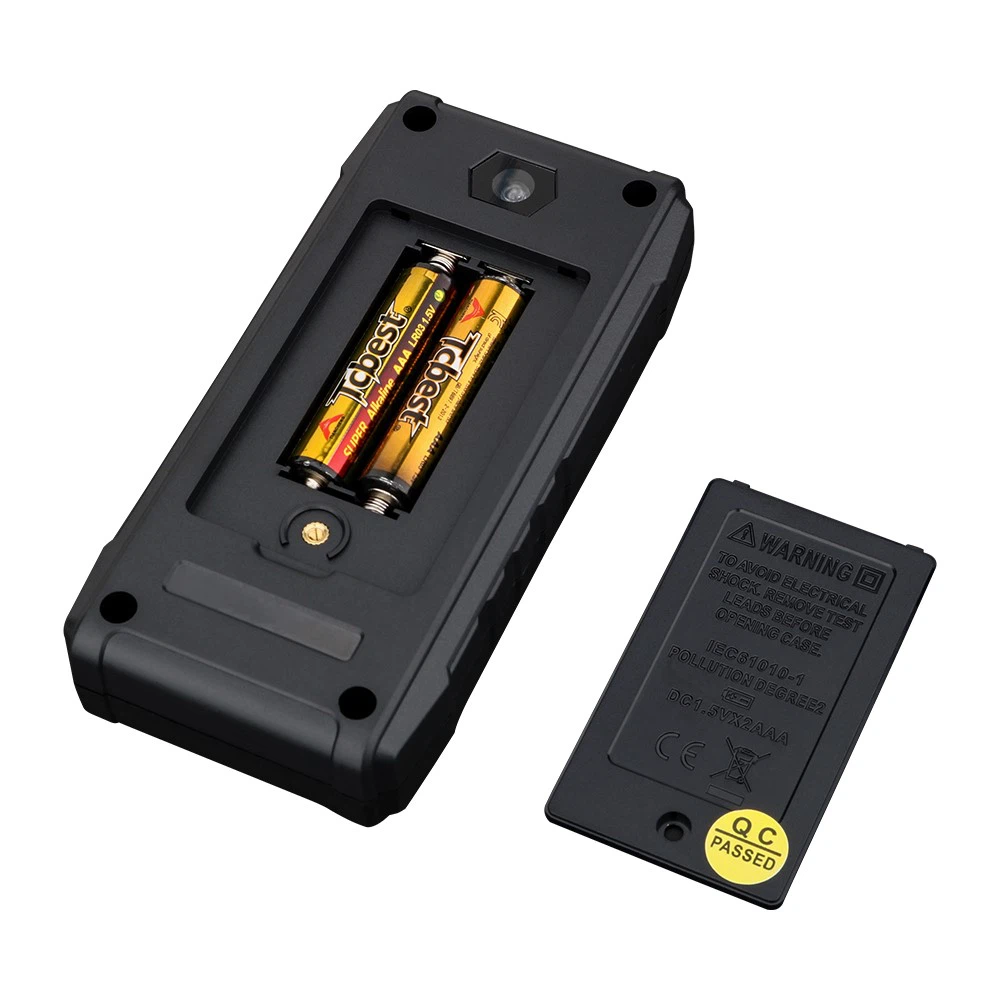
3. Remove the bottom battery box cover, take out the 1.5-volt battery, and place the multimeter in the DC voltage range of 2.5 volts. Measure whether the battery has 1.5 volts, if not, replace it. If the voltage is sufficient, observe whether there is oxidation or rust on the positive and negative spring plates of the battery box. If there is, remove it. No rust, adjust the shrapnel to enhance contact with the battery, and install the battery. See if it can be reset to zero. Cannot reset to zero, next step.
4. Open the meter box and observe if there is any poor contact or broken resistance wire of the potentiometer when the reset wire is wound around the center contact of the potentiometer. No problem, next step
5. Check the contact status of the gear shift switch in the ohmic position and observe for any poor contact of the switch. No problem, proceed to the next step.
6. Observe the small wire winding resistance of Ohm x1 gear for burning.
If the first five steps of the inspection are all normal, the problem is the sixth step. Usually, some people do not pay attention and mistakenly use the ohm range to measure the voltage, burning out the internal small wire winding resistor and causing it to fail to return to zero. Accurately matching with resistors of the same resistance value eliminates the fault.