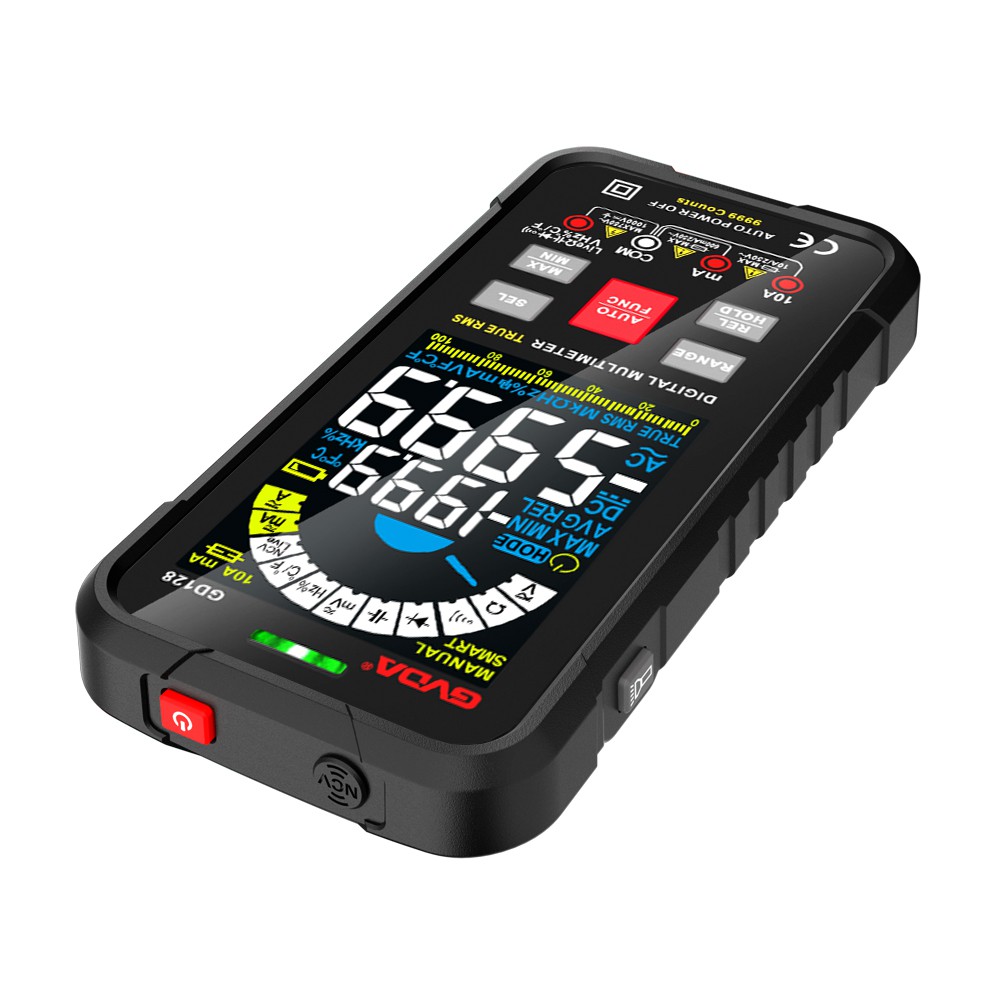
What does each of the gears on the multimeter measure?
Digital multimeter measurement range: DC voltage (DCV), AC voltage (ACV), DC current (DCA), AC current (ACA), resistance (Ω), diode forward voltage drop (VF), transistor emitter current amplification factor (hrg), capacitance (C), conductance (ns), temperature (T), frequency (f), buzzer level (BZ) for checking line continuity, low power method resistance level (L0Ω). Some instruments have inductance, signal, AC/DC automatic conversion, and capacitance automatic range conversion.
Most digital digital multimeters have added the following novel and practical test functions: reading hold (HOLD), logic test (LOGIC), true effective value (TRMS), relative value measurement (RELΔ), automatic shutdown (AUTO OFF POWER), etc.
Precautions for using a multimeter:
(1) Before using the multimeter, you should first perform a "mechanical zero adjustment", that is, when there is no electricity being measured, the multimeter pointer should point at the zero voltage or zero current position.
(2) When using the multimeter, do not touch the metal part of the test lead with your hands. This can ensure accurate measurement on the one hand, and personal safety on the other hand.
(3) When measuring a certain amount of electricity, you cannot change gears while measuring, especially when measuring high voltage or large current, you should pay more attention. Otherwise, the multimeter will be damaged. If you need to change gears, you should disconnect the test leads first, and then measure after changing gears.
(4) When using the multimeter, it must be placed horizontally to avoid errors. At the same time, attention should also be paid to avoiding the influence of external magnetic fields on the multimeter.
(5) After using the multimeter, the transfer switch should be set to the maximum AC voltage range. If it is not used for a long time, the battery inside the multimeter should also be taken out to prevent the battery from corroding other components in the meter.