What factors should be considered when purchasing a gas detector
Toxic gas detectors can be used to detect the concentration of toxic gases in the petroleum, chemical, and pharmaceutical industries in real time to ensure the safety of workers! The toxic gas detector is an interference free "intelligent" detector produced, which can detect the types of toxic gases and has a wide detection range that is unparalleled in the industry. The detector consists of a miniature plug-in electrochemical sensor located inside a 3166 stainless steel housing, an intelligent transmitter module (ITM) encapsulated in epoxy resin, and a sensor splash guard.
1. Firstly, let's take a look at how to choose a fixed gas detector
This type of instrument is commonly used in industry. This is an instrument installed in a fixed position for detecting toxic gases that leak. It is generally divided into two types and installed separately at the detection site and a safe place, which is conducive to monitoring and has the characteristics of continuous stability. However, it is not universal and should be selected according to the type and concentration of the gas. The installation position should also be carefully considered, and the installation height of the sensor should be selected for possible leaks.
2. Next, let's take a look at the selection of portable gas detectors
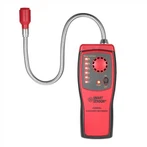
Because of its small size and easy operation, it can be taken to different occasions and places. The CO sensor is located on the probe, and the probe can measure humidity, temperature, etc.
3. Once again, it is necessary to distinguish between the degree of openness and closure of the environment when selecting a toxic gas detector to determine whether it is a closed space or an open environment.
4. If it is a sealed workplace such as storage tanks, sewers, etc., testing should be conducted before personnel enter the sealed space. Testing can be done outside the sealed space. Generally, toxic gas detectors used for inspecting confined spaces are equipped with built-in sampling pumps, as gas concentrations and types vary in different areas of the space. Equipped with a built-in pump, it can detect various gases and divide them into different parts for detection. Its small size is convenient for workers to carry, and it can detect organic and inorganic gases to prevent hypoxia, thus ensuring the health and safety of workers.
5. If it is an open environment like an open workshop, a diffusion type toxic gas detector can be equipped as an alarm instrument that can be carried around, and the concentration of toxic gases can be continuously, real-time, and accurately displayed.