How to choose a gas detector for different environments
Choosing the appropriate and correct gas detector based on different environments and testing requirements is a crucial consideration for every person engaged in safety and hygiene work. The selection of gas detectors varies depending on the environment.
1. Fixed type:
This is a commonly used detector in industrial equipment and production processes. It can be installed at specific detection points to detect specific gas leaks. Fixed detectors are generally two-piece, with a detection head composed of sensors and transmitters installed as a whole on the detection site, and a secondary instrument composed of circuits, power supplies, and display alarm devices installed as a whole in a safe place for easy monitoring. Its detection principle is as described in the previous section, but it is more suitable for the continuous and long-term stability required for fixed detection in terms of process and technology. They also need to be selected based on the type and concentration of the gas on site, and attention should be paid to installing them in the most likely leak location of specific gases, such as selecting the most effective height for sensor installation based on the specific gravity of the gas, and so on.
2. Portable:
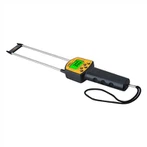
Due to its convenient operation and compact size, the portable instrument can be carried to different production sites. The I-probe can measure temperature, humidity, CO, CO2, calculate outdoor air percentage, dew point, wet bulb temperature, and other information. The on-screen prompts and step-by-step indexing guide users through operations, settings, and on-site calibration. Plug in multifunctional probe.
The use of gas detection in different environments
1. Closed space:
For example, in workplaces such as reaction tanks, storage tanks or containers, sewers or other underground pipelines, underground facilities, agricultural enclosed grain warehouses, railway tankers, shipping cargo holds, tunnels, etc., inspections must be conducted before personnel enter, and inspections must be conducted outside the enclosed space. At this point, it is necessary to choose a multi gas detector with a built-in sampling pump. Because there are significant differences in gas distribution and types in different parts (upper, middle, and lower) of a confined space. So a complete enclosed space gas detector should be a portable instrument with built-in pumping function for non-contact and segmented detection of hazardous gases with multiple gas detection functions to detect different spatial distributions, including inorganic gases and organic gases. It should also have oxygen detection function to prevent oxygen deficiency or enrichment. Its small size does not affect workers' work. Only in this way can the absolute safety of personnel entering confined spaces be guaranteed.
2. Open venue:
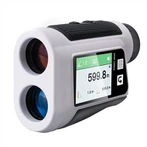
For example, in open workshops, such instruments can be used as safety alarms, and portable diffusion gas detectors can be used because they can continuously, real-time, and accurately display the concentration of toxic gases on site. Some of these new instruments are also equipped with vibration alarm attachments to avoid audible alarms in noisy environments, and computer chips are installed to record peak values, STEL (15 minute short-term exposure level), and TWA (8-hour statistical weighted average) to provide specific guidance for worker health and safety.