What factors should be considered when selecting an infrared thermometer?
The following factors shall be taken into account:
a) Type
According to on-site requirements, either handheld (portable) or fixed (online) models may be selected.
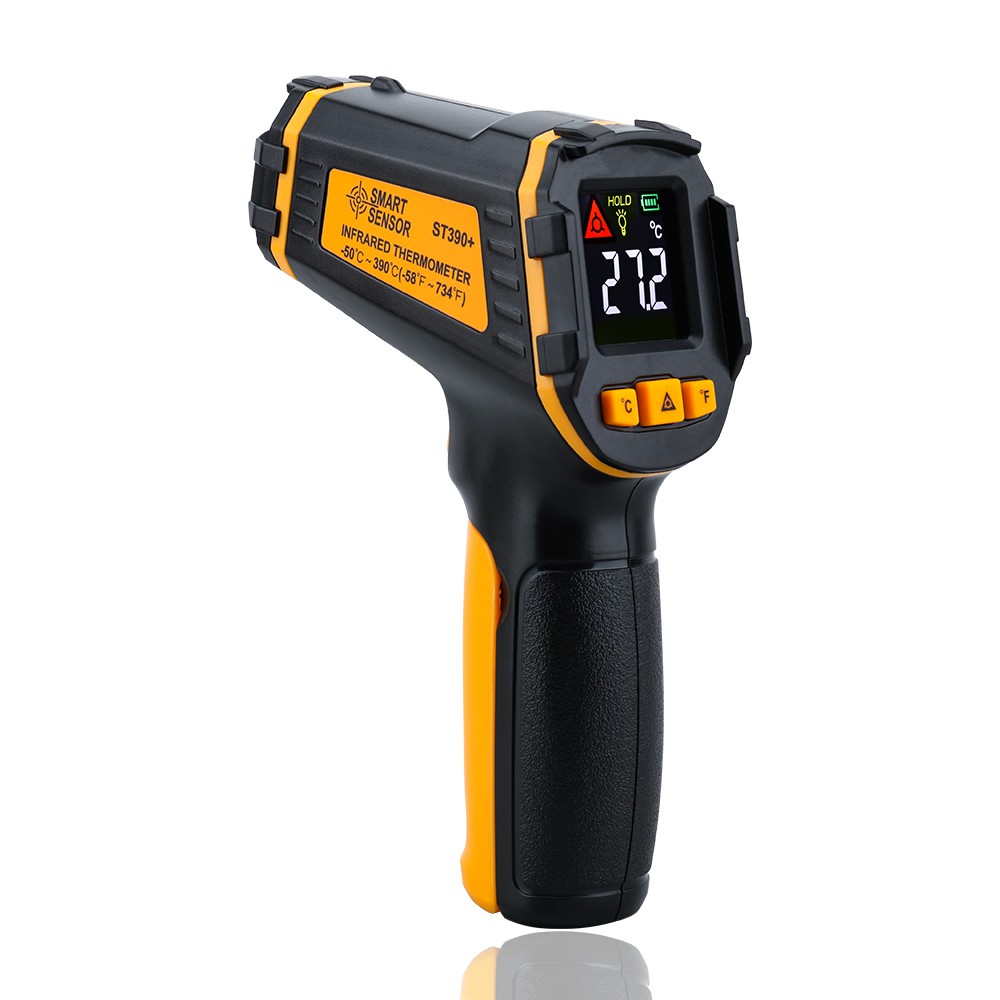
Features of handheld thermometers:Compact and lightweight, battery-powered, easy to carry for on-the-go temperature detection and data recording. Equipped with optical or laser aiming devices, they feature simple operation. Temperature measurement can be completed merely by pulling the trigger.
Features of fixed thermometers:Designed for permanent installation in industrial sites, capable of 24-hour continuous monitoring. They can be connected to computers to realize closed-loop control. With protective housings, air cooling or water cooling accessories installed, they can operate in harsh environments and high-temperature conditions up to 315°C.
b) Temperature Measurement Range
The measuring range of the thermometer must meet actual application requirements.
c) Distance-to-Spot Ratio
The distance-to-spot ratio (D:S) refers to the ratio of the distance between the thermometer and the target to the diameter of the measured spot. A higher ratio indicates better optical resolution. For the same target, a thermometer with a larger distance-to-spot ratio can perform measurement from a farther distance.
In general, thermometers with a high distance-to-spot ratio offer higher sensitivity and come at a relatively higher cost.
d) Minimum Measurable Target
When measuring small objects, it is necessary to confirm whether the minimum measurable target size of the thermometer satisfies on-site working conditions.