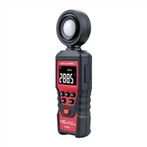
What gases can the VOC detector detect?
The Chinese name of VOC is: volatile organic compounds. There are hundreds of kinds of organic volatile gases. Common ones in life include formaldehyde, alcohol, toluene, and xylene, which are all organic volatiles. To detect these organic volatiles, you need to use a VOC detector. VOC detectors are used to measure toxic organic gases in hazardous environments. They are generally used in printing, furniture manufacturing, shoemaking, petrochemicals, oil refining and other industries. So what gases can VOC detectors detect?
The VOC detector uses a photoionization gas sensor (PID) to detect volatile organic compounds (VOC). The photoionization gas sensor (PID) is mainly used for the detection of volatile organic compounds (VOC). These volatiles include:
Aromatics: benzene, xylene, naphthalene, etc.;
Saturated hydrocarbons and unsaturated hydrocarbons: octane, ethylene, cyclohexane, etc.;
Ketones, aldehydes, ethers: acetone, propionaldehyde, propyl methyl ether, etc.;
Halogenated hydrocarbons, sulfur hydrocarbons, alcohols, esters, hydrazines, etc.
In addition, detectable inorganic substances include arsenic and ammonia.
The above mentioned gases that VOC detectors can detect are shared here. VOC detectors have the advantages of stable signal, high precision and good repeatability. They are widely used in oil refining and petrochemicals, chemical production, synthetic fiber manufacturing, and surface coating. , printed furniture, electronic components and textile printing and dyeing and other industries.