What happens if the electric test pen is broken and the live wire is broken?
The interior of the test pen is generally composed of high-resistance resistors, neon tubes and springs. The resistance of this high-resistance resistor is generally at the MΩ level, and it is connected in series with the neon tube. The current flows through the neon tube and the human body. The possibility of damage to the resistor is very small, but if there is a fault such as poor contact between the resistor, the neon tube and the spring, if the fault is unknown, use the electric pen to measure whether the electrified body has AC high voltage. At this time, the neon tube will not light up (or the brightness is very weak), and misjudgment will occur, which will cause the user to get an electric shock. In addition, if water has accidentally entered the interior of the test pen, and the inside is relatively humid, it is easy to cause an electric shock accident when using the test pen to measure AC220V voltage. Therefore, before using the test pen, you should check whether the test pen is good or not Use it again without any problems.
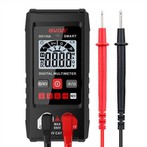
When using a digital multimeter instead of a test lead to judge the neutral wire and live wire, you can adjust its range switch to the AC 200V voltage range, touch the black test lead to the ground or wall, and the red test lead to touch two wires respectively. If the red test lead touches zero Line, the voltage displayed by the multimeter is very small, close to 0 volts, if the red test pen is in contact with the live wire, the voltage displayed by the multimeter is generally above tens of volts. Using this method to measure AC high voltage is not like the electric pen, there will be current flowing through the human body, which is safer.
①Very dangerous!
②However, the danger does not occur when measuring the live wire with a test pen. The high-resistance resistors used in the test pen are solid-core resistors, also known as volume resistors, which are divided into two categories: organic synthetic solid-core resistors and inorganic synthetic solid-core resistors. This type of resistor is made by mixing and pressing granular conductive materials, non-conductive powder materials used as fillers, and binders. Granular conductive materials are carbon black and graphite; non-conductive powder materials are mica powder, quartz powder, glass powder, titanium dioxide (titanium dioxide powder), etc.; some adhesives use organic adhesives, and some use inorganic adhesives The two types of organic solid core resistors and inorganic solid core resistors mentioned above are distinguished according to the type of adhesive. This type of resistor has strong overload resistance, high reliability, and is not easy to damage. In case of damage, it will also show an open circuit state, that is, the neon tube will not light up although it is not damaged, but the person holding the electric pen to measure the live wire will not get an electric shock.
③The danger of electric shock occurs when the live wire is powered, but the resistor of the test pen is damaged and falsely reports that there is no power. People are likely to touch the live wire by mistake and get an electric shock!
If the resistance of the electric pen is broken (mostly solid pressed resistance, the resistance value is several M), it can be divided into two situations:
One is to disconnect (this is often the case), after the resistance is disconnected, the electric circuit is disconnected, the neon bulb of the test pen has no current, and the neon bulb does not light up, which is easy to cause misjudgment of the electrification of the circuit under test;
The second is a short circuit (this situation is rare). The neon tube of the test pen breaks down due to the high voltage for a moment (the normal working voltage of the neon bulb is 70V). At this time, the neon tube plays an insurance role and will not cause harm to people.