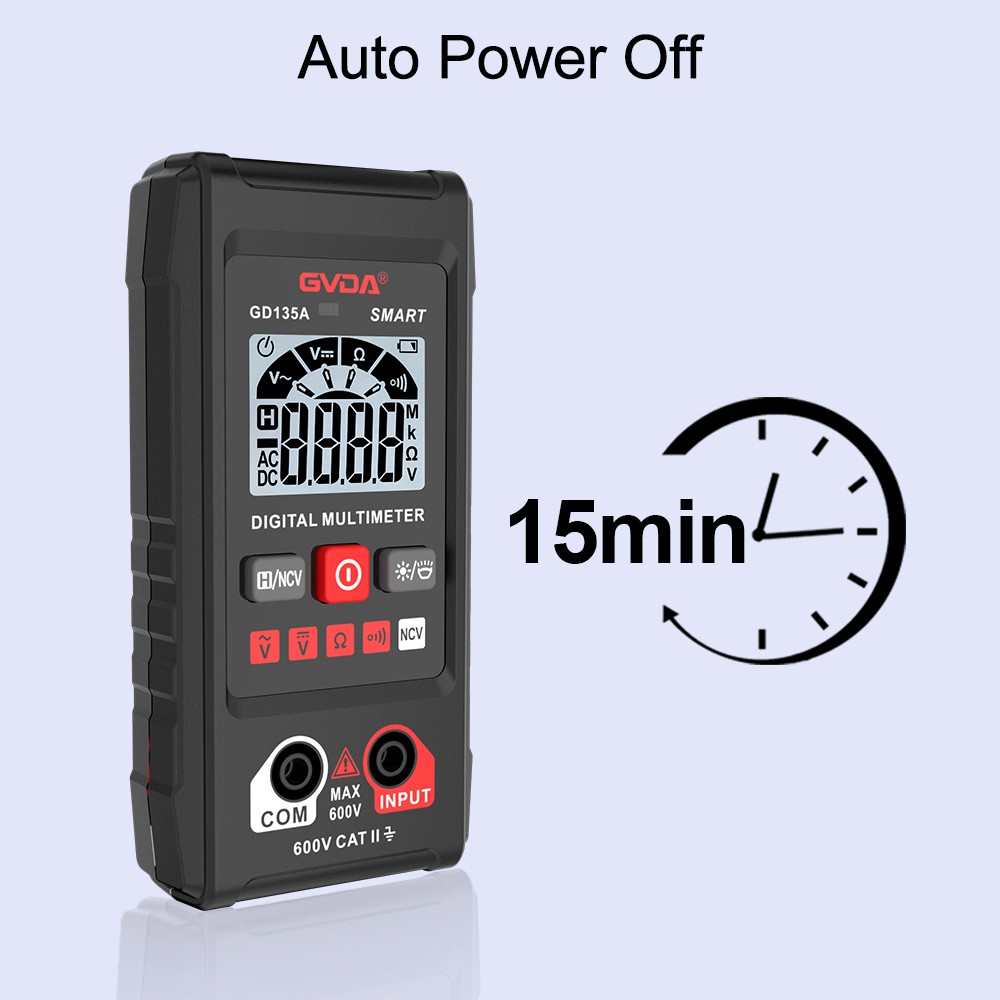
What happens if the forward resistance is 0 and the reverse resistance is 0 when measured with a multimeter?
Mechanical meters generally refer to pointer meters, which use resistor shunting to make the current flowing through the pointer meter reach the rated value of the meter, which happens to be at full range.
High voltage diodes can be connected in series with multiple secondary high voltage diodes, or they can be packaged together in a single package after being connected in series. GTR (transistor) type, if it is a single diode, will be made of high voltage resistant materials and processes, which cannot be measured by a general multimeter.
An additional 10F20 15V battery is used in the Rx10k range of the pointer meter to measure resistance above 100k.
Multiple high-voltage diodes connected in series, if a single tube has a voltage of 1000V and a withstand voltage of 20000V, 20 diodes need to be connected in series, with each tube having a voltage drop of 0.7V. Therefore, most meters can only measure diodes within 10000V, and higher withstand voltages require the instrument itself to have higher voltages.
If the forward measurement is zero, it indicates breakdown, and the normal value is 10000 volts for 7k. (Zero should be compared first, otherwise it may explode)
The reverse measurement is 17.2K, which accounts for one-third of the dial. Normally, it should be infinite, and the damage should also be zero resistance. If there is no physical object, it can only be inferred that the tube has been broken down and a large amount of carbon powder has appeared. When measured in reverse, it is the value of a partially broken diode that has not been broken down. Lightly tap the diode with an instrument, and the value should float. In 10K mode, if a diode is not broken down or partially broken down, and the value itself is 700 Ω, the measuring instrument will display itself as zero.
Another possibility is that the tube is normal and has a low voltage resistance, so it is approximately zero in the forward direction. When measuring in the reverse direction, do not touch the device with your hand, otherwise the human body resistance will be measured. Without a diode, measuring the hand directly would still yield this value.
There is another possibility that is relatively small but exists, which is that germanium material diodes will exhibit this phenomenon. This type of tube has a large reverse leakage, with forward conduction of 10000 volts less than 3K, and reverse resistance, but it is more random and can be large or small, but the tube is good.