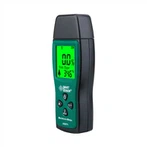
What is the reason why the voltage between the zero line and the live line is 380V measured by the multimeter
The voltage between the neutral line and the live line is fixed at about 380V. The most likely reason is that during the maintenance of the power supply and distribution lines, a careless maintenance electrician mistakenly connects the original single-phase 220V distribution neutral line to a phase line with a different phase sequence. The "neutral line" of the 220V voltage user becomes 380V voltage to the live wire (although this situation is extremely rare, it does not rule out the possibility).
Some so-called "experts" who have no practical experience are keen to pretend to know how to answer electrical questions. thinking is extremely wrong. Because the neutral point displacement of the three-phase load caused by the disconnection of the neutral line source of the three-phase four (five) line power distribution, the voltage of each phase cannot reach the user's voltage implicitly within a voltage value, and because the neutral line in this way When the power supply is disconnected; the electrical appliances turned on by users of each phase sequence will form a circuit between phase wires and phase wires of different phase sequences through the electrical appliances turned on by users of different phase sequences, so the voltage at both ends of the electrical appliances will be due to the load of each phase. Changing in size.
That is to say; if the neutral point of the three-phase load is displaced due to the open circuit of the zero line source of the three-phase four (five) line power distribution, when the load is large The voltage of one phase will decrease, and the voltage of one phase with small load will increase when the load is turned on. As the loads (electrical appliances) that are turned on and burned out between the three-phase users are constantly changing, the voltage of the three phases is also constantly changing. , If it is not handled in time at this time, most of all electrical appliances (equipment) in the entire power distribution system will eventually burn out.
Recently, I happened to come into contact with three-phase alternating current. The potential difference between each phase line and the neutral line is exactly 220V, which is also used at home, and the potential difference between the phase line and the phase line is exactly 380V. In other words It is very likely that one of the phase wires in your house is connected to the neutral wire, so that there will be a potential difference of 380V.
If this situation occurs at home, you must consider asking the staff of the power grid to troubleshoot the fault, otherwise the high voltage will easily burn the electrical appliances.
Whether this is the case can actually be judged simply by yourself. You can find an electric pen and insert it into the two socket holes one by one to see if each socket has electricity. If there is electricity, it is the situation I said. It's phase line. I think the subject is using a multimeter to measure the voltage. It means that there is a multimeter at home. You can insert the red test lead of the multimeter into the socket alone. The black test lead is not inserted, but try not to touch the black test lead with your hands. If there is voltage in both jacks , then it can be judged that it is the situation I mentioned.