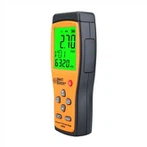
What problems may be encountered when using combustible gas detectors
Gas detector is an instrument tool for detecting gas leakage concentration, mainly referring to portable and fixed gas detectors. Mainly using gas sensors to detect the types of gases present in the environment, gas sensors are sensors used to detect the composition and content of gases.
What gases do the standard four in one contain?
Some people are not very clear about the commonly mentioned standard configuration of four in one gas and the range of gas detection. Simply put, the standard configuration of four in one gas includes combustible (methane) 0-100% LEL, carbon monoxide 0-1000PPM, oxygen 0-30% VOL, and hydrogen sulfide 0-100PPM. Suitable for use in many places. Personnel entering confined spaces, such as reaction tanks, storage tanks or containers, sewers or other underground pipelines, railway tankers, shipping holds, tunnels, etc., must undergo on-site gas testing before entering, and testing must be conducted outside the confined space. At this point, multiple gas detectors with built-in pumps must be selected. Because the gas distribution and types vary greatly in different parts (upper, middle, and lower) of a confined space. Generally speaking, the proportion of combustible gases is relatively light, and most of them are distributed in the upper part of enclosed spaces; Carbon monoxide has a similar specific gravity to air and is generally distributed in the middle of enclosed spaces; Heavier gases such as hydrogen sulfide exist in the lower part of confined spaces. At the same time, oxygen concentration is also one of the types that must be detected.
The difference between natural diffusion type and pump suction type
Gas detectors are known to have two common detection methods, one is natural diffusion type and the other is pump suction type. However, it is unknown what the difference between these two methods is. Natural diffusion type slowly senses gas without applying any external force, while pump suction type uses self suction pump to independently suck gas. For example, the human nose reacts faster, so when choosing, it is important to focus on which detection method can effectively detect gas.
What is using oxygen to reverse measure nitrogen gas?
Oxygen and nitrogen are relatively common gases, and the main components in the air are 30% oxygen and 70% nitrogen. Due to the high price of nitrogen specific sensors, some people may choose to use oxygen sensors to reverse measure nitrogen. In fact, it is possible to subtract the oxygen content value from 100 to obtain the oxygen content value.
Is the gas detector explosion-proof?
The gas detector depends on whether it has reached the explosion-proof level. The general explosion-proof levels of the detector are BT3, BT4, and CT3, so when we purchase the detector, we can focus on these explosion-proof levels.