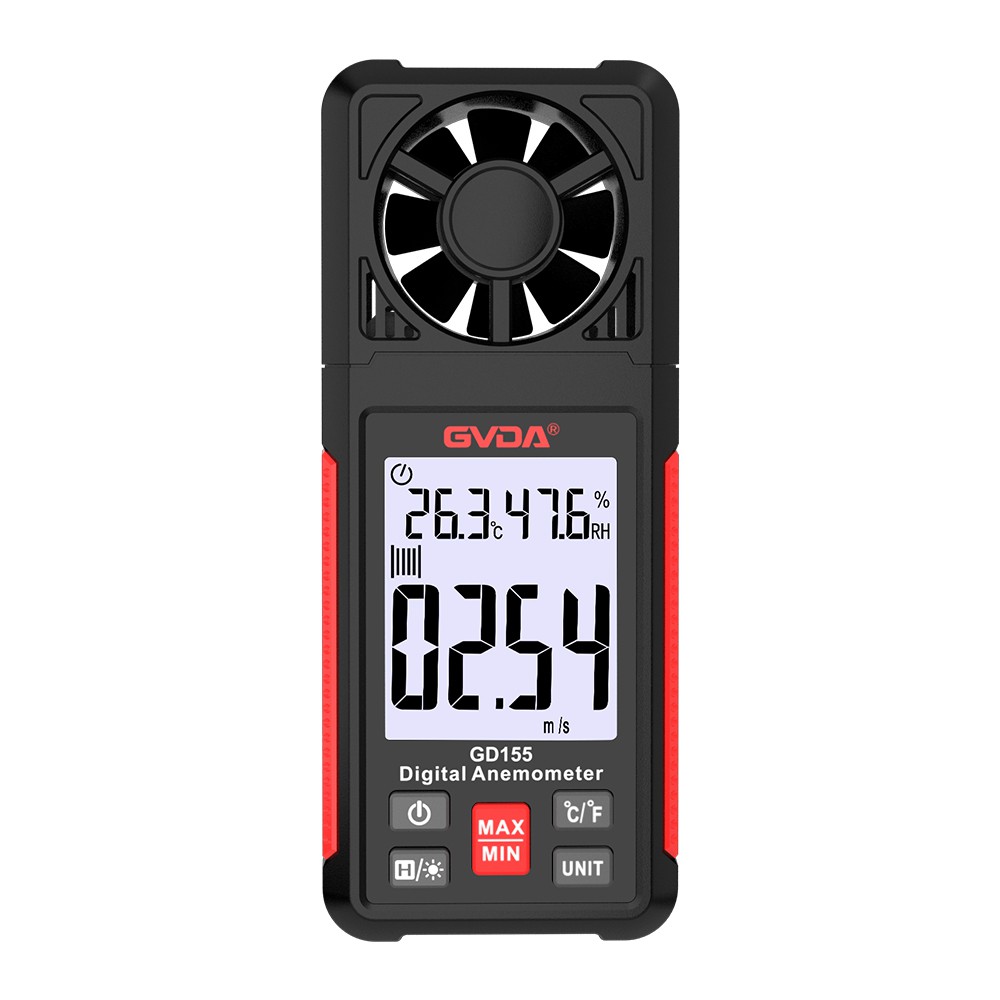
What should be paid attention to when using the anemometer?
The anemometer is used to measure the instantaneous wind speed and direction, and has an automatic display function. It is mainly composed of a pole, a wind vane, a wind cup, and a wind speed and direction sensor. The direction of the wind vane is the direction of the incoming wind, and the wind speed is calculated according to the speed of the wind cup.
Wind speed measurement uses a low-inertia wind vane component as the sensing component. The wind vane component rotates with the wind and drives the wind direction code disc at the lower end of the rotating shaft. The code disc performs photoelectric scanning and outputs pulse signals according to 8-bit Gray code coding. A wind sensor is an instrument used to measure the horizontal direction of the wind. Wide range of applications, such as meteorological stations, ships, oil platforms, environmental protection, etc. Wind direction and wind speed measuring instruments include wind direction anemometer, wind direction and wind speed monitor and other wind direction and wind speed instruments. The following points should be paid attention to in the installation process of such wind direction and wind speed instruments:
The site selection of the device is usually used for wind measurement with wind measuring instruments. It is very important to choose a reasonable device site. The specific requirements are as follows:
(1) The distance between the wind measuring instrument and the obstacle is at least ten times the height of the obstacle itself. If this requirement cannot be met, the wind measuring instrument should be placed about 6-10 meters above the obstacle.
(2) When it is necessary to install the wind measuring instrument on the roof, it should be installed in the center of the flat roof, not on the side to avoid the influence of a certain direction.
During the use of the instrument, if used properly, the instrument requires no maintenance, but serious contamination will cause the gap between the rotating parts and the stationary parts of the instrument to block, so regular dirt is required. 2. Due to the long-term use of the instrument, the bearing wears and the performance of the instrument is affected. At this time, the instrument can be sent back to the factory for maintenance.
Since the anemometer is an instrument for on-site use, the environmental conditions during use are far from those in the laboratory. It can be seen from the working principle of the instrument that before calibration, the rotation axis of the wind speed sensor and the coupling of the anemometer need to be connected with a hose, and the rotation axis of the sensor is required to be strictly concentric with the rotation axis of the instrument. If it is eccentric, the rotational torque of the coupling cannot be completely transmitted to the rotational shaft of the wind speed sensor, which will easily cause inflexible rotation, which will bring errors to the measurement results. Therefore, it is necessary to repeatedly adjust its concentricity during installation, and then start the calibration work after adjustment.