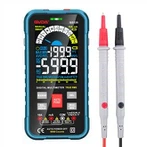
When measuring on/off, what is the difference between a multimeter resistance mode and a buzzer mode?
Multimeter resistance file can measure the specific size of the line resistance, and then we can analyse the resistance size to determine whether the line is normal or what faults exist.
The beeper can only determine whether the line resistance is large or small (generally about 30-50Ω as the cut-off point, different multimeters are a little different).
Assuming that the critical resistance value of the multimeter beeper is 50Ω, then when the line or load resistance is less than 50Ω, the beeper will sound, and the smaller the resistance, the louder the beeper. But when the line or load resistance is greater than 50Ω more, the beeper will not sound. So when the line resistance is greater than 50Ω or ∞, we use the buzzer gear is no way to distinguish.
Single-phase motor good or bad judgement
Know from the title of the motor has a total of 4 lines, then we can speculate that the motor should be a single-phase motor (specifically what type of single-phase motor to see the real thing in order to draw conclusions).
Single-phase motors have two coil windings, a start winding and a run winding. Because of the thicker coil of the running winding and the thinner coil of the starting winding, the resistance value of the starting winding is larger than that of the running winding. That specific resistance size and motor type, power related, more than ten ohms to one or two hundred ohms are possible. (The higher the motor power, the lower the resistance; the lower the power, the higher the resistance)
If the motor power is very small, then its resistance value will be very large, if the resistance value is greater than 50Ω, we use the buzzer file to measure the results is not ringing. Similarly, if the motor winding is burnt out, then we use the buzzer gear will not ring.
If the motor power is large, then its resistance value will be small, if the resistance value is less than 50 Ω, we use the buzzer gear measured results is a beep. Similarly, if there is a short-circuit in the middle of the motor winding, then the result we measured with the beeper gear is also a beeping sound.
So there's really no way to tell if the motor is good or bad in the situation you're describing. To judge whether the motor is good or bad, we need to analyse the motor resistance and power.
Multimeter resistance file can measure the specific size of the line resistance, and then we can analyse the resistance size to determine whether the line is normal or what faults exist.
The beeper can only determine whether the line resistance is large or small (generally about 30-50Ω as the cut-off point, different multimeters are a little different).
Assuming that the critical resistance value of the multimeter beeper is 50Ω, then when the line or load resistance is less than 50Ω, the beeper will sound, and the smaller the resistance, the louder the beeper. But when the line or load resistance is greater than 50Ω more, the beeper will not sound. So when the line resistance is greater than 50Ω or ∞, we use the buzzer gear is no way to distinguish.
Single-phase motor good or bad judgement
Know from the title of the motor has a total of 4 lines, then we can speculate that the motor should be a single-phase motor (specifically what type of single-phase motor to see the real thing in order to draw conclusions).
Single-phase motors have two coil windings, a start winding and a run winding. Because of the thicker coil of the running winding and the thinner coil of the starting winding, the resistance value of the starting winding is larger than that of the running winding. That specific resistance size and motor type, power related, more than ten ohms to one or two hundred ohms are possible. (The higher the motor power, the lower the resistance; the lower the power, the higher the resistance)
If the motor power is very small, then its resistance value will be very large, if the resistance value is greater than 50Ω, we use the buzzer file to measure the results is not ringing. Similarly, if the motor winding is burnt out, then we use the buzzer gear will not ring.
If the motor power is large, then its resistance value will be small, if the resistance value is less than 50 Ω, we use the buzzer gear measured results is a beep. Similarly, if there is a short-circuit in the middle of the motor winding, then the result we measured with the beeper gear is also a beeping sound.
So there's really no way to tell if the motor is good or bad in the situation you're describing. To judge whether the motor is good or bad, we need to analyse the motor resistance and power.