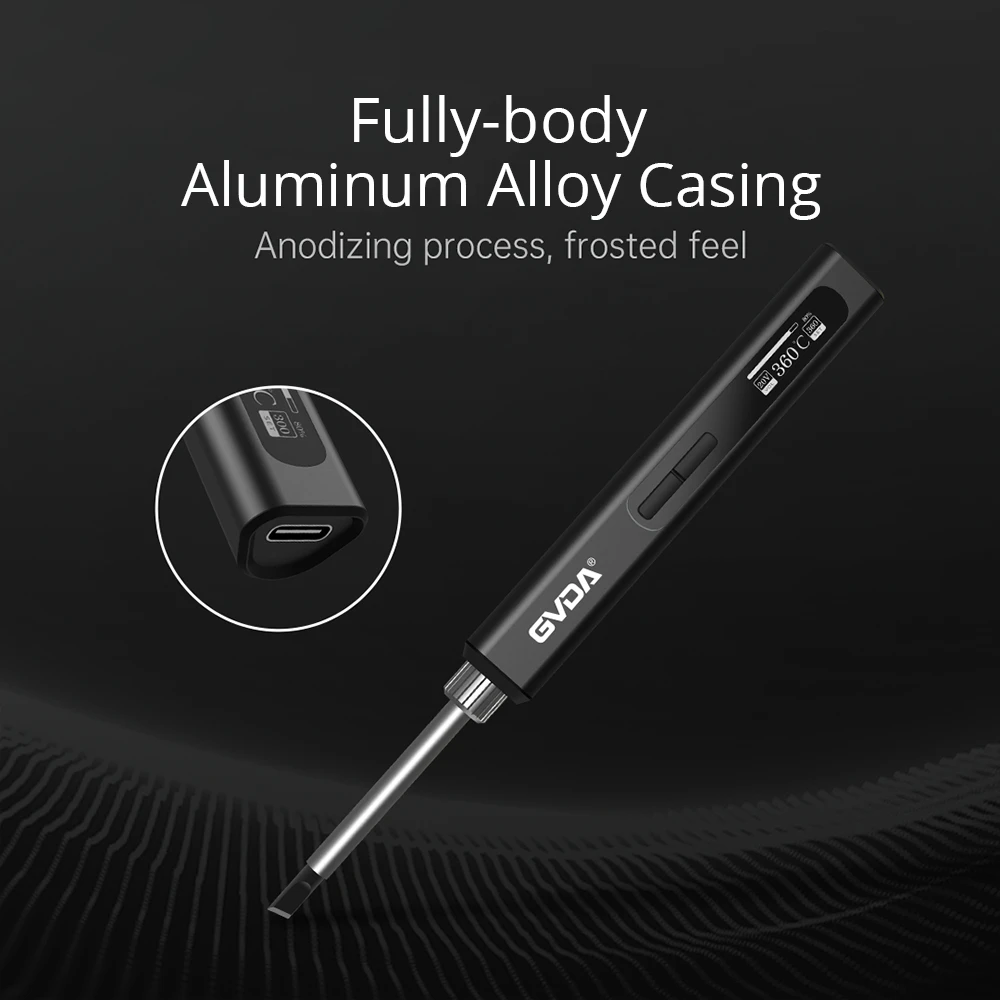
Which is better, high-power or low-power electric soldering iron?
There are various types of power for electrified iron, ranging from 15 watts and 20 watts for smaller ones, 200 watts and 300 watts for larger ones, and 500 watts for pistol style ones. When performing welding work, the power of the soldering iron must be determined based on the welding object, and sometimes the power of the electric network iron must also be selected based on the climate season (winter, summer). Welding electronic components, using 15 watts to 20 watts is good, using 500 watts, a soldering iron will be a black hole, of course not good.
Whether the power selection is appropriate depends mainly on the melting and flow of the solder, which should not exceed three seconds. Too long can damage electronic components, too short can lead to unreliable soldering, and the solder joints are not smooth.
Generally, it is recommended to use a soldering iron with a power of 20 watts for welding small components such as resistors, capacitors, transistors, and integrated blocks. In winter, it is recommended to increase the power by one level and use a soldering iron with a power of 25 watts. When welding large components such as heat sinks, transformers, shielding covers, or grounding large-area copper plates, it is recommended to use 35 watts to 40 watts. So, it is necessary to choose the appropriate power of the soldering iron according to the welding object, and there is no such thing as whether the power is too high or too low.
There are various types of power for electrified iron, ranging from 15 watts and 20 watts for smaller ones, 200 watts and 300 watts for larger ones, and 500 watts for pistol style ones. When performing welding work, the power of the soldering iron must be determined based on the welding object, and sometimes the power of the electric network iron must also be selected based on the climate season (winter, summer). Welding electronic components, using 15 watts to 20 watts is good, using 500 watts, a soldering iron will be a black hole, of course not good.
Whether the power selection is appropriate depends mainly on the melting and flow of the solder, which should not exceed three seconds. Too long can damage electronic components, too short can lead to unreliable soldering, and the solder joints are not smooth.
Generally, it is recommended to use a soldering iron with a power of 20 watts for welding small components such as resistors, capacitors, transistors, and integrated blocks. In winter, it is recommended to increase the power by one level and use a soldering iron with a power of 25 watts. When welding large components such as heat sinks, transformers, shielding covers, or grounding large-area copper plates, it is recommended to use 35 watts to 40 watts. So, it is necessary to choose the appropriate power of the soldering iron according to the welding object, and there is no such thing as whether the power is too high or too low.
Common welding problems and solutions
Oxidation problem: During the welding process, sometimes the welded object may oxidize, affecting the welding effect. At this time, solder cleaner can be used to clean the welding area, and solder paste and solder wire can be used for treatment before welding.
Tin jumping problem: During soldering, the solder may jump to areas that do not require soldering, causing problems such as short circuits. At this point, excess solder can be removed using tweezers or tin suction devices, and the stability of the solder can be maintained during soldering.
Unstable welding: Loose welding points after welding can easily have adverse effects on the welded product. The solution is to perform sufficient preheating, the welding time should be appropriate, and the solder should be evenly applied to the welding area.
Temperature control issue: Excessive or insufficient temperature of the soldering iron can affect the welding quality. It is necessary to adjust the temperature of the soldering iron according to the characteristics and requirements of the welded object to ensure the welding quality.