Why are carbon dioxide purity detectors widely used in breweries?
What we call mouthfeeling means that when drinking beer, a large amount of carbon dioxide dissolved in beer disperses and escapes in the mouth, and the tongue feels numb in the mouth, resulting in a fresh, stimulating and comfortable feeling. The taste of beer is mainly caused by the carbon dioxide fully dissolved in the beer and the reasonable material composition. The carbon dioxide must be firmly combined in the beer, so that the beer will not disappear quickly after being poured into the cup, and it can be kept until it escapes in the mouth!
The effect of carbon dioxide produced naturally by yeast is different from that of pressurized carbon dioxide. Because of the presence of yeast, protein, and secondary metabolites, the foam of beer will be much finer, giving people a very different look and taste. The pressurized carbon dioxide is a thick bubble, which escapes quickly and disappears in a very short time.
CO2 content in beer. The higher the CO2 content in the beer, the stronger the mouth-killing power of the beer. If the beer wants to have a stronger mouth-killing power, the CO2 content must be at least greater than 0.50% (m/m). The CO2 content is mainly achieved through the control of temperature and pressure during the fermentation and storage of wine.
In addition, the temperature and pressure should be well controlled during the wine filtering and filling process to reduce the loss of CO2 in beer.
CO2 saturation time. During the fermentation process, the longer the wine is stored at low temperature, the stronger the separation of CO2 and colloidal substances in beer is, and the stronger the mouth-killing power is. In order to achieve the stable separation of CO2, the wine should be stored at 0----1 ℃ for at least 1 week.
The relationship between carbon dioxide and beer is very close. The carbon dioxide in beer is not only conducive to the formation of uniform foam, giving beer a mouth-killing feeling, but also helping to prevent beer from oxidation, and can also precipitate part of the hop resin to make the bitterness of beer more delicate. The effect of softening and inhibiting bacterial pollution, there is no carbon dioxide in beer, and beer is at best a glass of bitter water. Low carbon dioxide in beer will affect the foamability and foam retention of beer, the foam will disappear soon, and the taste will become flat. But high levels of carbon dioxide in beer are not good either. In the process of beer production, it is good to control the carbon dioxide content in beer in an appropriate range, which is beneficial to the quality of beer and to reduce the damage of wine and bottle. During the beer brewing process, the carbon dioxide in the beer is kept within an appropriate range by controlling the sugar content of the can, tank pressure, fermentation liquid temperature, and wine storage time.
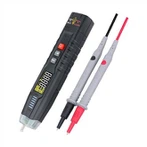
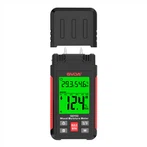
L-100 type CO 2 purity tester uses lye absorption method to measure the purity of carbon dioxide gas, and is widely used in gas detection stations and breweries.
When CO 2 is added to beer, the added CO 2 must contain as little oxygen as possible, otherwise a large amount of CO 2 injected into the beer under high pressure may lead to a rapid increase in dissolved oxygen. Monitor the purity of the added CO2 gas with an L-type CO2 purity tester with an accuracy as high as 0.001%, and effectively evaluate the impact of CO2 on dissolved oxygen in beer.