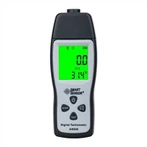
Why do I need a dual impedance digital multimeter?
Most of the digital multimeters sold today for testing industrial, electrical, and electronic systems have high impedance input circuits greater than 1 megaohm. This means that when a digital multimeter is placed in a circuit for measurement, its impact on circuit performance is minimal. This is the effect required for most voltage measurement applications, especially important for sensitive electronic or control circuits.
Old troubleshooting tools such as analog multimeters and solenoid testers generally have low impedance input circuits of 10 kiloohms or less. Although these tools are not deceived by false voltages, they can only be used to test power circuits or other circuits where low impedance does not affect or alter circuit performance.
By using dual impedance measuring instruments, technicians can easily troubleshoot sensitive electronic or control circuits, as well as circuits that may contain false voltage, and can more reliably determine the presence of voltage on the circuit. On the Fluke 11X series digital multimeter, the Vac and Vdc switch positions of the instrument are generally in the high impedance position. These switch positions can be used for most troubleshooting tasks, especially for sensitive electronic loads.
What is false voltage? Where do they appear?
Ø False voltage comes from energized circuits and non energized wires that are very close to each other (such as in the same conduit or conduit). This situation can form a capacitor that creates capacitive coupling between the live wire and adjacent unused wires.
When the multimeter wire is placed between the open circuit and the neutral conductor, a complete circuit is effectively formed through the input of the multimeter. The capacitance between the connected thermal conductor and the floating conductor is combined with the input impedance of the multimeter to form a voltage divider. The multimeter then measures and displays the obtained voltage value. Most digital multimeters today have a sufficiently high input impedance to display this capacitive coupling voltage (giving a false impression of a conductor being charged). The multimeter actually measures the voltage coupled to the disconnected conductor. But sometimes, these voltages can reach 8085% of the hard wired voltage. If they are not identified as false voltages, it will consume additional time, effort, and funds in troubleshooting circuit problems
The most common locations where false voltage is encountered are burnt out fuses in distribution panels, unused cables or wires in existing conduits, or broken ground or neutral wires in 1 V branch circuits or cards that use 1 V control circuits to control assembly lines or transport functions. A certain amount of false voltage can be coupled from the live side of the blown fuse to the open side. When constructing facilities or buildings and conducting electrical wiring, electricians often pass additional wires through conduit for future use. These wires are usually left unconnected before use, but capacitive coupling may occur. For control circuits, the position of the circuit is usually close to unused control circuits, resulting in a false voltage.