Why does the basement need to be regularly checked for moisture?
1: Water tends to run to the lowest available 'ground'
This is a simple scientific fact that water will follow the path of least resistance until it no longer moves. As the lowest point of a building, the basement is the ultimate destination for water. Although the pool in the basement is more common (and immediately apparent) after a major flood event, water leaking from pipes between walls in the structure may also accumulate in the basement.
2: Basement often encounters' blindness, loss of reason '
Many residents of buildings often visit the main areas of residential and office buildings - therefore, any obvious signs of water damage are usually detected quickly.
However, it is unlikely to see daily pedestrian traffic in the basement of homes and offices. Therefore, it may take longer before someone discovers the problem. Regular inspections of basements - especially after floods, adverse weather events, or pipe bursts in buildings - are crucial for quickly finding excess water to prevent long-term damage.
3: Just because the flood recedes does not mean that the basement has been cleared
If the flood recedes after a major flood event, it does not mean that all excess water will disappear from the structure. Water can be absorbed by many different materials in the basement - providing fertile soil for mold growth or pest nesting for several weeks after floods' disappear '.
After any major flood event, it is necessary to test the moisture content of various materials in the basement.
How to test the moisture in the basement
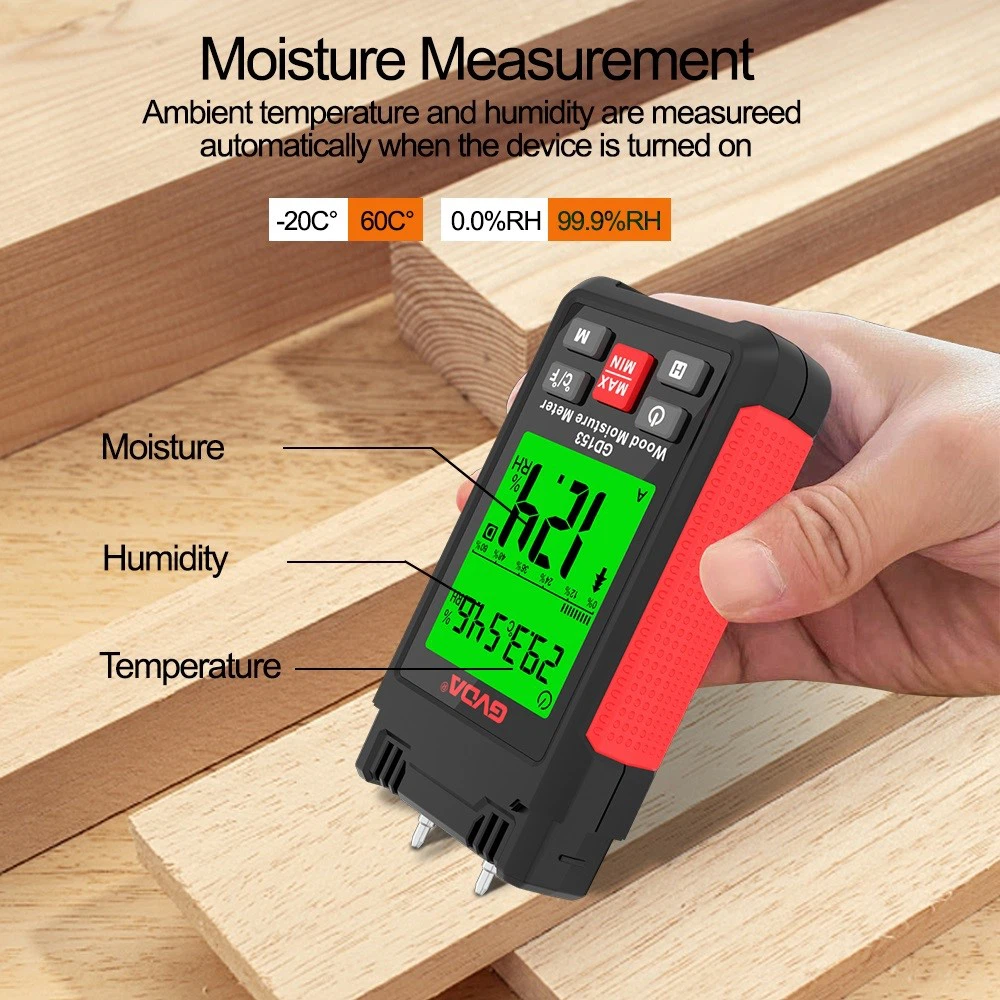
Why does the basement need to be regularly checked for moisture? Figure 1 shows that households and business owners can do some things to test the presence of excess water in the basement.
A quick check is to use a thermometer to test the relative humidity (RH) conditions in the basement. A higher relative humidity level may indicate the need for wet materials and further testing.
A hygrometer is another useful tool for detecting moisture in a basement. You can use two types of hygrometers: needle type and needle less instruments.
1) The needle type uses the principle of resistance to measure the moisture content of various materials between two electrodes. Since water is a conductor, the more water there is, the lower the resistance (and vice versa).
2) A needle free measuring instrument uses electromagnetic radio frequency waves to scan an area and uses distortion in the waveform to measure the amount of water in the tested material.
Needle less instruments are very popular because they are easy to use and can take readings in a larger area than needle instruments, thus accelerating the testing process. However, needle less instruments require a flat and sturdy surface to function properly. Therefore, needle moisture meters are typically used to test softer materials or materials with curved and uneven surfaces.
Some people use two types of hygrometers, or special two in one devices that combine needle and needle less instrument functions in one device.