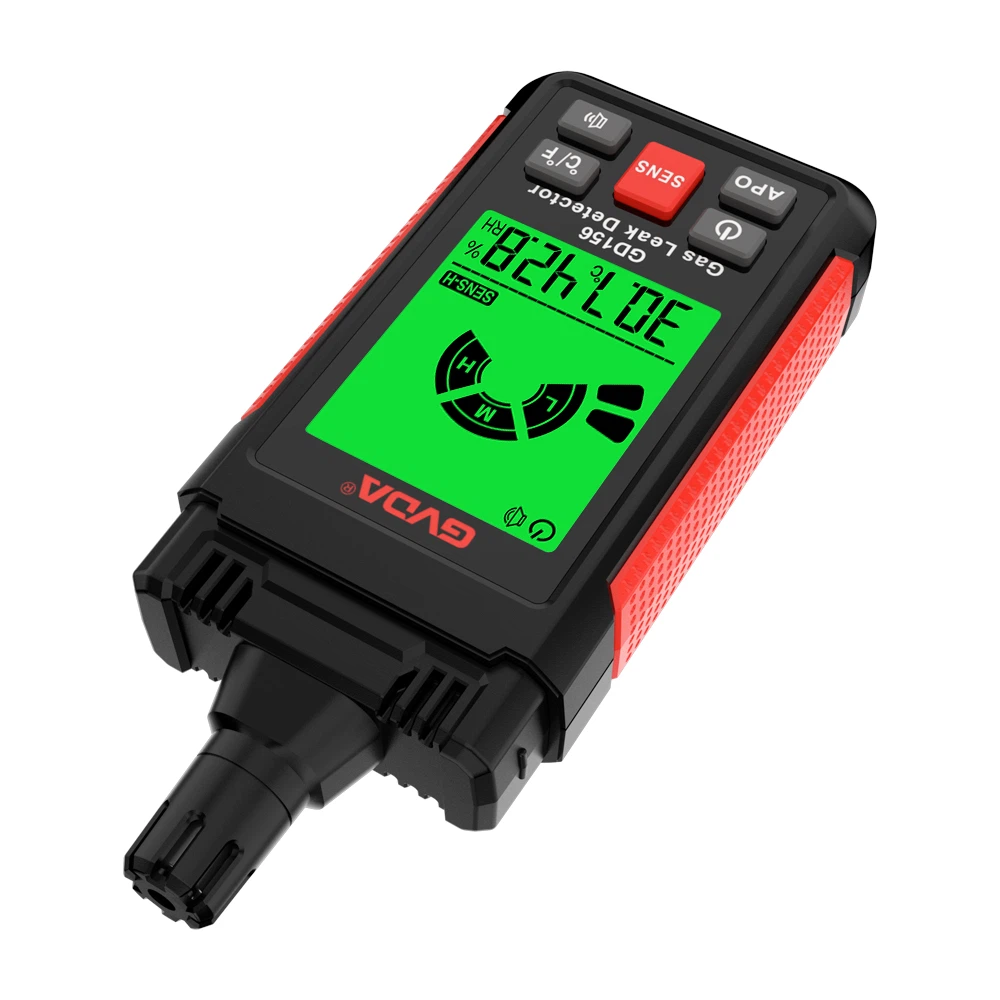
Why does the reading keep fluctuating during detection with a handheld flammable gas detector?
1, Equipment itself: sensor or hardware issues
Sensors are the core of combustible gas detectors. If the sensor malfunctions or its performance decreases, it is easy to cause numerical jumps. For example, if the sensor is used for a long time, the internal components will age, and the sensitivity to gas perception will decrease, resulting in unstable values; If the surface of the sensor is contaminated with oil, dust, or water vapor, it will block the contact between the gas and the sensing element, causing fluctuations in the detection signal and triggering numerical jumps.
Hardware failures can also cause this situation. The combustible gas detector detects poor contact in the internal circuit, such as loose connection wires between the sampling pump and the motherboard, or oxidation of the battery interface, which can cause unstable power supply and affect the transmission and display of detection data; If the performance of the sampling pump deteriorates, the pumping speed will fluctuate, the flow rate of gas entering the sensor will be unstable, and the value will also jump with the change of airflow.
2, Environmental interference: influence of airflow or external substances
Detecting changes in airflow in the environment is a common cause. When detecting near ventilation openings, fans, or outdoor areas with wind, the airflow will disperse or gather flammable gases, causing the gas concentration in contact with the sensor to fluctuate and the value to fluctuate accordingly; When conducting inspections in a confined space, if personnel move around and generate local airflow, it can also interfere with gas distribution and cause numerical fluctuations.
In addition, other substances in the environment may also interfere with the detection. For example, if there is high concentration of dust, oil fumes, or other non target combustible gases in the detection area, they may react with the sensor, causing the detection signal to be disrupted; Sudden changes in environmental temperature and humidity, such as entering a high-temperature room from a low-temperature outdoor environment, can affect the working status of sensors and may also cause unstable values.
3, Improper operation: Failure to pay attention to usage details
Improper behavior during operation can also lead to numerical jumps. For example, if the handheld combustible gas detector shakes too much during detection, or if it frequently moves its position during detection, the sensor may not be able to stably perceive the current gas concentration in the area before moving to another location, and the value will fluctuate with the change of the detection point; If an external
sampling tube is used, if the tube is bent, blocked, or leaked, it will cause the gas sampling volume to be unstable, leading to numerical jumps.
Also, not preheating the equipment according to the specifications may also cause problems. Starting the detection without waiting for the combustible gas detector to warm up after turning on, the sensor has not entered a stable working state, and the values are prone to fluctuations; Without zero calibration before testing, the initial reference value of the equipment is inaccurate, and subsequent testing values may deviate from the normal range, manifested as jumps.
4, Troubleshooting and Solutions
First, check the status of the combustible gas detector to see if there are any obvious stains or damages on the sensor. If there are, clean or replace it; Check if the battery level is sufficient and if the interface is oxidized. If necessary, replace the battery or clean the interface; Equipment with sampling pumps is used to test whether the pumping is uniform. If the pump speed is abnormal, repair or replace it.