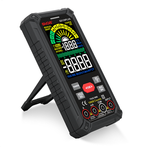
Why is the infrared carbon dioxide detector so popular? What is its industrial value?
1, Protect personnel safety and reduce environmental risks
Underground mines, tunnels, warehouses, laboratories, and other enclosed or semi enclosed spaces have limited ventilation conditions and are prone to carbon dioxide accumulation. Excessive concentration may lead to hypoxia in the human body, causing dizziness and even more serious health problems. The infrared carbon dioxide detector can monitor concentration changes in real time. When the value exceeds the safe range, it will promptly sound and light an alarm to remind personnel to take evacuation or ventilation measures.
In the coal mining industry, it can capture the concentration changes of carbon dioxide produced by underground coal seam oxidation. In the laboratory, it can prevent health hazards caused by gas leaks and provide strong support for personnel safety.
2, Optimize industrial production and stabilize product quality
In many industrial fields such as food brewing, chemical synthesis, and electronic manufacturing, the production process has specific requirements for carbon dioxide concentration. Abnormal concentration can directly affect production efficiency and product quality. The monitoring capability of infrared carbon dioxide detector can provide reliable data reference for the production process.
In food brewing, real-time tracking of carbon dioxide concentration in the fermentation tank can help control the degree of fermentation and ensure product taste. In the clean workshop of electronic manufacturing, the concentration can be continuously monitored and linked to the fresh air system to avoid impurities from affecting product accuracy. In the chemical industry, it can assist in controlling the concentration of reaction materials and reducing production losses.
3, Improve indoor environment and enhance comfortable experience
With people's increasing attention to indoor air quality, infrared carbon dioxide detectors are gradually entering scenes such as homes, offices, schools, hospitals, etc. In densely populated spaces, carbon dioxide produced by respiration will continuously accumulate, and excessive concentration may lead to lack of concentration and fatigue. The infrared detector can display concentration values in real time, helping users determine whether ventilation or opening the fresh air system is needed.
In a closed heating or air conditioning environment, it can prevent the accumulation of carbon dioxide from affecting health. In hospital wards, appropriate concentrations can create a more conducive environment for patients' recovery. Stable air quality in the workplace can also help improve work efficiency.
4, Assist agricultural production and improve crop quality
In facility agriculture, carbon dioxide is an important raw material for crop photosynthesis, and an inappropriate concentration can affect the growth status of crops. The infrared carbon dioxide detector can monitor concentration changes in greenhouses and plant factories, and link relevant equipment to achieve dynamic regulation. Maintaining the concentration within an appropriate range can promote crop photosynthesis, shorten the growth cycle, and improve yield and quality.