Why the electrode in the pH meter must be calibrated regularly
After the pH electrode in the pH meter is used for a period of time, the asymmetric potential will change greatly, so it must be calibrated regularly
The frequency of pH electrode calibration and calibration depends on the sample, electrode performance and accuracy requirements for measurement, and is also related to the environment and cycle of use of the pH meter. For high-precision measurement (≤±0.03pH), it should be calibrated in time; for general precision measurement (≤±0.1pH), it can be used continuously for two weeks or even longer after one calibration. Frequent calibration of the electrode is absolutely unnecessary as long as the pH meter is in use and shows the pH is accurate.
Before calibrating the electrode, test the standard solution that is close to the measured solution, and determine whether recalibration is required according to the size of the error. In the following cases, it must be recalibrated:
Electrodes that have been used for a long time are based on newly replaced electrodes.
After the electrode measures concentrated acid (pH<2), or after measuring concentrated alkali (pH>12).
After the electrode measures a solution containing fluoride or a concentrated organic solution.
When the measured solution temperature of the electrode is too different from the standard solution temperature (or room temperature).
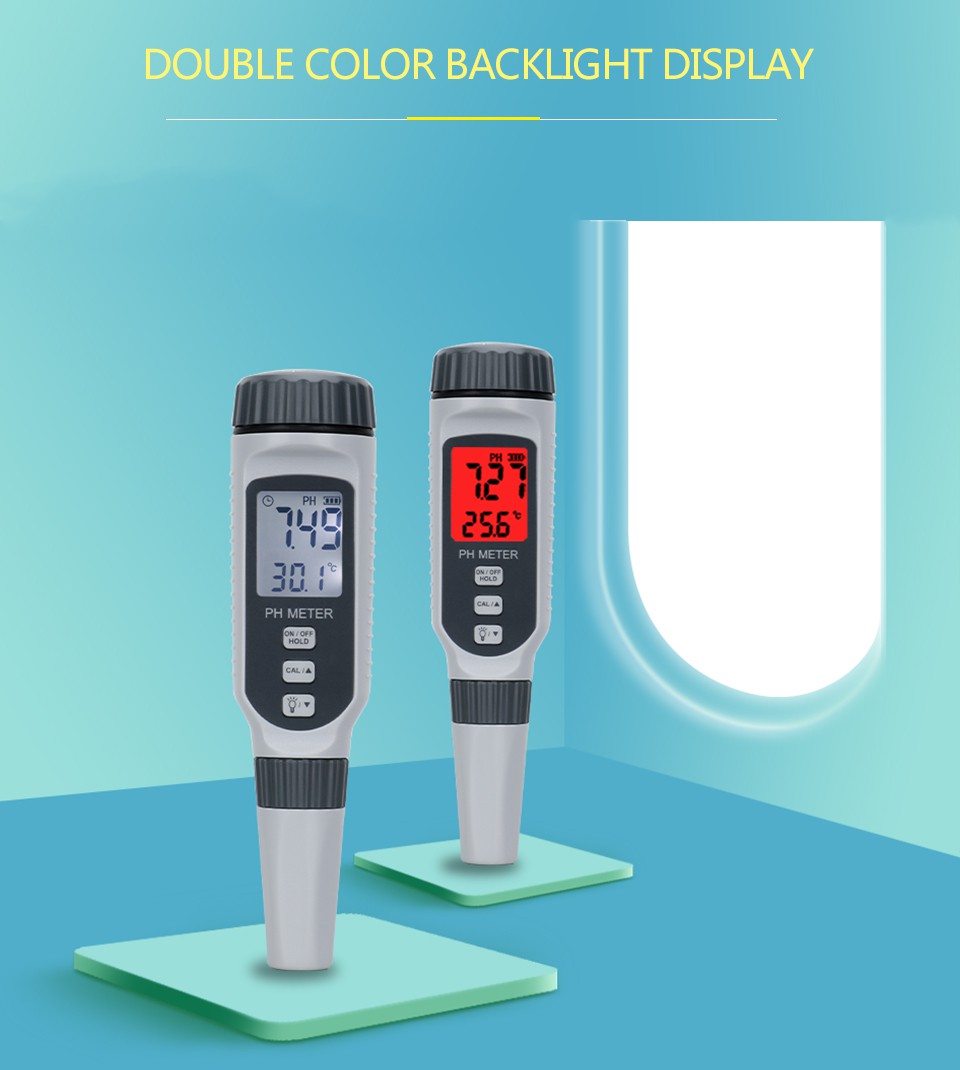
pH Calibration of Pen Type pH Meter
Immerse the pen-type pH meter electrode in the mixed phosphate standard buffer solution with a pH value of 6.86 (at 25°C), and shake it gently;
Use a small screwdriver to adjust the calibration potentiometer until the displayed value matches the pH value of the standard buffer solution at ambient temperature;
The pH electrode is inserted into the potassium hydrogen phthalate of pH 4.01 or the borax standard buffer solution of pH 9.18;
The displayed value should be within the error tolerance range compared with the pH value of the buffer solution.
Operation steps and methods
remove the protective case;
Clean the electrode of the pH meter with distilled water first, and use filter paper to absorb the moisture attached to the electrode;
Turn on the switch located on the battery compartment;
Insert the pH meter electrode into the liquid to be tested until the liquid is immersed slightly below the "immersion line". If conditions permit, the solution can be immersed to a position slightly higher than the "immersion line";
Stir the solution gently and read the displayed value after the value is stable;
After use, clean the pH electrode, turn off the switch, and put on the protective cover