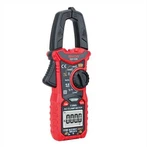
Wiring and method for measuring insulation resistance with a multimeter
① Measure the insulation resistance of lighting or power lines to ground, with the E terminal reliably grounded and the L terminal connected to the tested line.
② Measure the insulation resistance of the motor, connect the grounding terminal E of the insulation resistance meter to the casing, connect the L terminal to the motor winding, and then perform a shake test.
③ When measuring the insulation resistance of a cable, in addition to connecting the outer shell to E and the wire core to L, the insulation layer in the middle also needs to be connected to G.
When measuring, rotate the handle smoothly and maintain a speed of 120r/min. The insulation resistance of electrical equipment varies with the length of measurement time, and the pointer indication after 1 minute is usually used as the standard. If the pointer is found to be zero during measurement, the handle should be stopped from rotating to prevent the coil inside the meter from overheating and burning out. After the insulation resistance meter stops rotating and the tested equipment discharges, the measuring wire can be manually removed.
④ When recording readings with an insulation resistance meter, the ambient temperature and humidity at that time should be recorded simultaneously to facilitate comparison of measurement results at different times and analysis of the causes of measurement errors.
⑤ The lead wires of the insulation resistance meter terminal should use multi stranded flexible wires with good insulation, and the flexible wires should not be twisted together.
Precautions for using an insulation resistance meter
① The generator voltage level of the insulation resistance meter should be adapted to the withstand voltage level of the tested object to avoid insulation breakdown of the tested object.
② It is prohibited to shake and measure live equipment, double circuit overhead lines or busbars. When one circuit is live, the insulation resistance of the other circuit must not be measured to prevent high-voltage induced electricity from endangering personal and instrument safety.
③ It is strictly prohibited to conduct measurement work on lines where people are working, in order to avoid endangering personal safety. During lightning, it is prohibited to use an insulation resistance meter to measure insulation resistance on high-voltage power lines that are experiencing power outages.
④ Before the insulation resistance meter stops rotating or the tested equipment discharges, do not touch the terminal of the tested equipment or insulation resistance meter with your hands.
⑤ When using an insulation resistance meter to shake test equipment insulation, two people should be responsible.
⑥ The wire used for shake testing should be insulated, and the two leads should not be twisted together. The end should have an insulation sleeve.
⑦ When measuring insulation resistance near live equipment, the measuring personnel and the position of the insulation resistance meter must be selected appropriately, maintaining a safe distance from the live body to prevent the insulation resistance meter lead or lead support from touching the live part. When moving the lead wire, attention must be paid to monitoring to prevent workers from getting electric shock.
⑧ When shaking capacitive equipment such as capacitors, power cables, large capacity transformers, motors, etc., the insulation resistance meter must be in the rated speed state before the measuring pen can be touched or removed from the tested equipment to avoid damaging the instrument due to capacitor discharge.