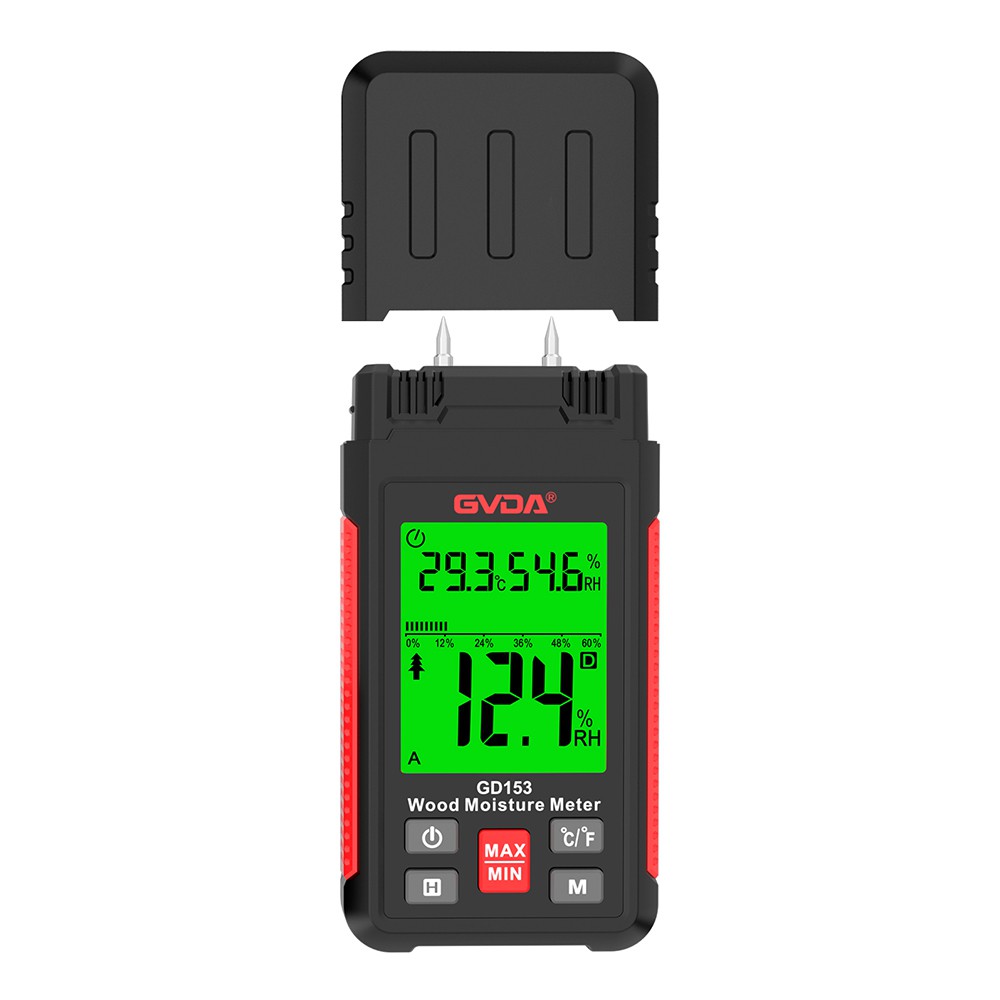
Wood Moisture Detector and Indoor Environment
The indoor environment where people live does not want excessive fluctuations in humidity, and should be stable within a certain range, which is very beneficial for personal health and the preservation of objects. Research data shows that the relative humidity range for preventing wet mold is 0-80%; Prevent pest infestations at 0-70% or 80-100%; Save books at 40-60%; Prevent bacterial infection by 55-60%; The lowest mortality rate is 60-70%, and the relative humidity of human living environment should be around 60, which is more suitable.
There are many factors that can cause changes in indoor humidity, such as changes in external temperature or indoor temperature; Water vapor flowing in or out from air vents or ventilation ports, water vapor passing through walls, and water vapor entering from the kitchen can also cause changes in humidity.
The moisture regulating property of wood is one of its unique properties, and it is also its advantage as an interior decoration material and furniture material. Residential buildings decorated with wood or wooden materials have much smaller humidity changes than those decorated with concrete or wallpaper. The so-called moisture regulating properties of wood rely on its own moisture absorption and desorption, directly alleviating the humidity changes in indoor environments. When the relative humidity of the indoor environment decreases, the equilibrium of water vapor partial pressure between the indoor environment and the wood is broken. The water vapor partial pressure inside the wood is higher than that of the indoor environment, and the moisture inside the wood will escape, causing the relative humidity of the indoor environment to increase. This is the desorption process. On the contrary, when the relative humidity of the indoor environment increases, wood will absorb moisture from the indoor air, which is the process of moisture absorption. Wood undergoes a very intense desorption or moisture absorption process at the beginning, and then gradually slows down until a new dynamic equilibrium is reached. Here, wood plays a role in storing moisture, just like a natural regulator of indoor air humidity. People have long been accustomed to living in environments with wooden furniture and interior decoration materials.