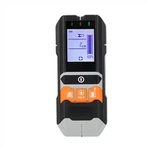
Wood Moisture Meter - Determination of Water Activity Value
There are many testing methods for water activity in products, such as steam pressure method, electric hygrometer method, hygrometer method with sensor, solvent extraction method, diffusion method, water activity meter method and approximate calculation method. Generally, the water activity meter method (AW meter method), solvent extraction method and diffusion method are commonly used. The water activity meter method is easy to operate and can get results in a short time.
1. AW measuring instrument method
(1) Principle: At a certain temperature, the sensor in the AW measuring instrument is mainly used to read the water activity indicated by the pointer from the meter head of the instrument according to the change of the vapor pressure of the water in the food. The AW of the AW meter should be 9.000 with barium chloride and solution calibration before sample measurement.
⑵ steps
① Instrument calibration
Two pieces of filter paper → Soak in barium chloride saturated solution → Gently place it in the sample box of the instrument with a small clip → Then put the sensor head on the sample box and tighten it gently → Keep the temperature at 20°C Oven → after heating and constant temperature for 3 hours → adjust the correction screw to AW to 9.00
② Sample measurement
Sampling → After constant temperature at 15-25°C → (Mash the fruit and vegetable samples quickly to take soup and solid samples in proportion to sampling → solid samples such as meat and fish need to be chopped properly) → Put the container sample box → put the sensor head Put it on the sample box and tighten it gently → put it in a constant temperature oven at 20°C → heat it for 2 hours → constantly observe the changes of the instrument pointer on the meter head → wait for the pointer to remain unchanged → the value indicated is the sample at this temperature AW value
2. Solvent extraction method
⑴Principle: Water in food can be extracted with immiscible solvent benzene. The amount of water extracted by benzene at a certain temperature varies with the water activity in the sample, that is, the amount of extracted water is proportional to the water activity in the water phase. The ratio of water in the sample is the water activity of the sample.
⑵ steps
Weigh sample 1.00g→into 250ml ground-mouth Erlenmeyer flask→add 100ml of benzene→stopper the bottle→shake for 1 hour→stand for 10 minutes→absorb 50ml→in Karl Fischer moisture analyzer→add 70ml of anhydrous methanol→mix → Use KF reagent to drop to reddish → charge
When the stream pointer remains unchanged, it is the end point → record
Find the saturated dissolved water value in benzene:
Take 10ml of distilled water instead of the sample → add 100ml of benzene → shake for 2 minutes → stand for 5 minutes → measure the same sample as above
⑶ Calculation
AW=[H2O]n×10/[H2O]0
AW——water activity value in the sample
[H2O]n——the amount of water extracted from food, that is, the number of milliliters of KF reagent consumed from the KF reagent titer multiplied by the titration sample
[H2O]0——Determination of the amount of extracted water in pure water
3. Diffusion method
After the sample is diffused and balanced in the higher and lower standard saturated solutions in the Convey micro-diffusion dish sealed and at constant temperature, the AW value in the sample is calculated according to the increase and decrease of the sample weight.