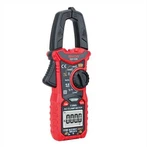
Clamp meter detection method for electricity billing device and energy meter
Detection method
Detection of high supply and low billing devices
(1) Use a digital ammeter to measure the pile head on the low-voltage side of the transformer, that is, the current at the L terminal of the current transformer 1w1v, Iwo
(2) Then measure the secondary terminal of the current transformer, that is, K, or the current 1IwIvJw at the K2 terminal (you can refer to the current indication value on the multi-function meter at the same time for mutual comparison, and the error shall not exceed 2%).
(3) IJIJ, INI, IwI. That is, whether the current transformer-primary to secondary ratio is consistent with the magnification on the nameplate of the current transformer and the meter reading card.
(4) Use the ammeter bayonet to simultaneously clamp the secondary wires K1 and K2 of the U-phase current transformer, and the ammeter indication should be zero at this time. If it is not zero, it means that one of the wires of the current transformer K1 or K2 has been broken. At this time, the billing will be reduced by 1/3. The measurement method of V phase and W phase is the same as that of U phase.
(5) Use the ammeter bayonet to clamp the K1 of the U-phase current transformer and the K1 line of the W-phase current transformer at the same time. At this time, the indication value of the ammeter is the secondary current value of the V-phase current transformer. Its value is the secondary current value of U phase or W phase. If the value is 1.73 times that of U-phase or W-phase, it means that the secondary K1 or K2 of the U-phase or W-phase current transformer must have - - only reversed. In the same way, it can be checked whether the secondary connection of the V-phase current transformer is reversed.
Detection of high-supply and high-meter billing devices
(1) Use an ammeter to measure the current Lu, Iv, and Iwo of the transformer low-voltage pile head
(2) Use the measured data 1J/25 and Iw/25 to calculate the high-voltage measurement current of the transformer, that is, the immediate primary current of the high-voltage metering box.
(3) Divide the ratio of 1J25 by the multiplier of the current transformer in the high-voltage metering box to obtain the secondary current of the high-voltage current transformer.
(4). The secondary current of the above-mentioned high-voltage current transformer should be equal to the U-phase current in the billing meter (refer to the same-phase current indication value of the multi-function meter), and the W-phase current can be calculated in the same way.
(5) You can also use the ammeter bayonet to clamp the U-phase current into the meter line K1 to get a current value, multiply this value by the high-voltage current transformer multiplier and then multiply by 25, that is, the U-phase low-voltage current on the low-voltage side of the transformer used value. The same method can also calculate the W-phase low-voltage current value.
(6) Use the bayonet of the ammeter to clamp the U-phase incoming meter wire K1 and the W-phase outgoing meter wire K2 at the same time. If the current value is close to the U-phase or W-phase, the current loop wiring is correct. If the current value is 1.73 times that of the U-phase or W-phase, it means that the secondary line of the U-phase or W-phase current loop must be reversed.
Check with a voltmeter
The voltage file of an ordinary voltmeter or a multimeter can be used to check whether the voltage of the metering voltage circuit is normal.
(1) Check for voltage loss and low voltage caused by open circuit or poor contact. Usually, the input and output terminals of the electric energy meter are checked first. Normally, the voltage of the voltage terminal should be equal to the external voltage. If there is no voltage, it means that the voltage is open circuit, or the incoming and outgoing lines of the electric energy meter are open circuited. If the voltage outside the meter is higher than the voltage inside the meter, it may be due to poor contact of the voltage bolt or a high resistance connected to the voltage wire inside the meter. Combining the voltage value of the multi-function meter with the actual measured value, the two should be consistent, and the voltage drop should not be greater than 2%.
(2) Check whether the voltage is abnormal due to wrong reverse phase sequence.
(3) Check the circuit voltage drop from the voltage line terminal to the energy meter. Under normal circumstances, the pressure drop is not more than 2%.