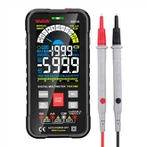
How to measure AC and DC with a multimeter
The multimeter should measure the effective value when measuring AC and measuring DC, that is, the root mean square value.
How to measure AC and DC with a multimeter
Digital multimeter to measure AC voltage: connect the black test lead to - or ground (marked in the test lead socket), and the red pen to AC (or add a ~ under the letter V); the gear refers to 750 in the AC~ column (some are 1000) (If it is to measure the mains 220V) range. Then the two pens touch the two holes of the power socket respectively, and the reading is the AC voltage value.
Measure the AC voltage with the pointer meter: connect the black test pen to negative or ground, connect the red pen to +, set the gear to AC~500V, insert two pens into the same digital multimeter to measure, the number pointed by the pointer needs to be read corresponding to the maximum range on the right: the selected one If it is 500V, read the reading according to the row with the largest number marked 50 on the right side of the reading plate. If the pointer points to 20, then the reading is 200V.
Digital multimeter to measure DC voltage: same as measuring AC, only the red pen is connected to the + hole, and the red pen is also in contact with the + pole of the power supply. The gear is DC (or the one with a short horizontal line under the letter V). big to small. For example, to measure a AA battery, then select the 2V range. If the polarity is reversed, there will be a negative display before the reading.
Measure the DC voltage with the pointer multimeter: the method is the same as that of the digital multimeter, and the reading is the same as the above-mentioned AC voltage measurement; when the positive and negative poles of the DC voltage cannot be determined, you can first measure it as an alternating current, but you don’t care about the readings, just reverse the polarity of the test leads Sex test, see which pointer deflects in the two measurements, then what the test pen is in contact with this time is the correct positive and negative polarity. Then turn the gear to the appropriate range of DC voltage and measure the reading again.
Due to the advantages of accurate measurement, convenient value selection, and complete functions, digital multimeters are very popular among radio enthusiasts. The most common digital multimeters generally have resistance measurement, on-off sound detection, and diode forward voltage measurement. AC and DC voltage and current measurement, triode magnification and performance measurement, etc. Some digital multimeters have added functions such as capacitance measurement, frequency measurement, temperature measurement, data memory and voice reporting, which bring great convenience to the actual detection work. However, due to improper use of digital square meters, it is easy to cause damage to the components in the meter and cause malfunctions during actual testing. Based on the actual situation of damage to the digital multimeter, I have summarized the precautions for the use of the digital multimeter for reference by beginners, so as to prevent damage to the digital multimeter as much as possible.
In most cases, the damage of the digital multimeter is caused by the wrong measurement position. For example, when measuring the AC mains, the measurement position is selected to be placed in the electric barrier. In this case, once the test pen touches the mains, it will instantly damage the internal components of the multimeter. damage. Therefore, before using the multimeter to measure, be sure to check whether the measurement gear is correct. After use, set the measurement option to AC 750V or DC 1000V, so that no matter what parameters are mismeasured in the next measurement, the digital multimeter will not be damaged.
Some digital multimeters are damaged because the measured voltage and current exceed the range. If the mains power is measured at the AC 20V gear, it is easy to cause damage to the AC amplifier circuit of the digital multimeter, and the multimeter loses the AC measurement function. When measuring DC voltage, if the measured voltage exceeds the measurement range, it is also easy to cause circuit failure in the meter. When measuring the current, if the actual current value exceeds the range, generally only the fuse in the multimeter will be blown, and no other damage will be caused. Therefore, when measuring voltage parameters, if you do not know the approximate range of the measured voltage, you should first set the measurement gear to the highest gear, and then change gears to measure after measuring its value to obtain more accurate values. If the voltage value to be measured is far beyond the maximum range that the multimeter can measure, it should be equipped with a high-resistance measuring probe. Such as detecting the second anode high voltage and focusing high voltage of black and white color TV.
The upper limit range of DC voltage of most digital multimeters is 1000V, so when measuring DC voltage, the highest voltage value is below 1000V, and generally the multimeter will not be damaged. If it exceeds 1000V, it is very likely to cause damage to the multimeter. However, the upper limit of measurable voltage may be different for different DMMs. If the measured voltage exceeds the range, it can be measured by resistance drop method. In addition, when measuring the DC high voltage of 400 ~ 1000V, the test leads must be in good contact with the measuring place without any jitter, otherwise, in addition to possibly causing damage to the multimeter and making the measurement inaccurate, in serious cases, the multimeter can also be used without any vibration. show.