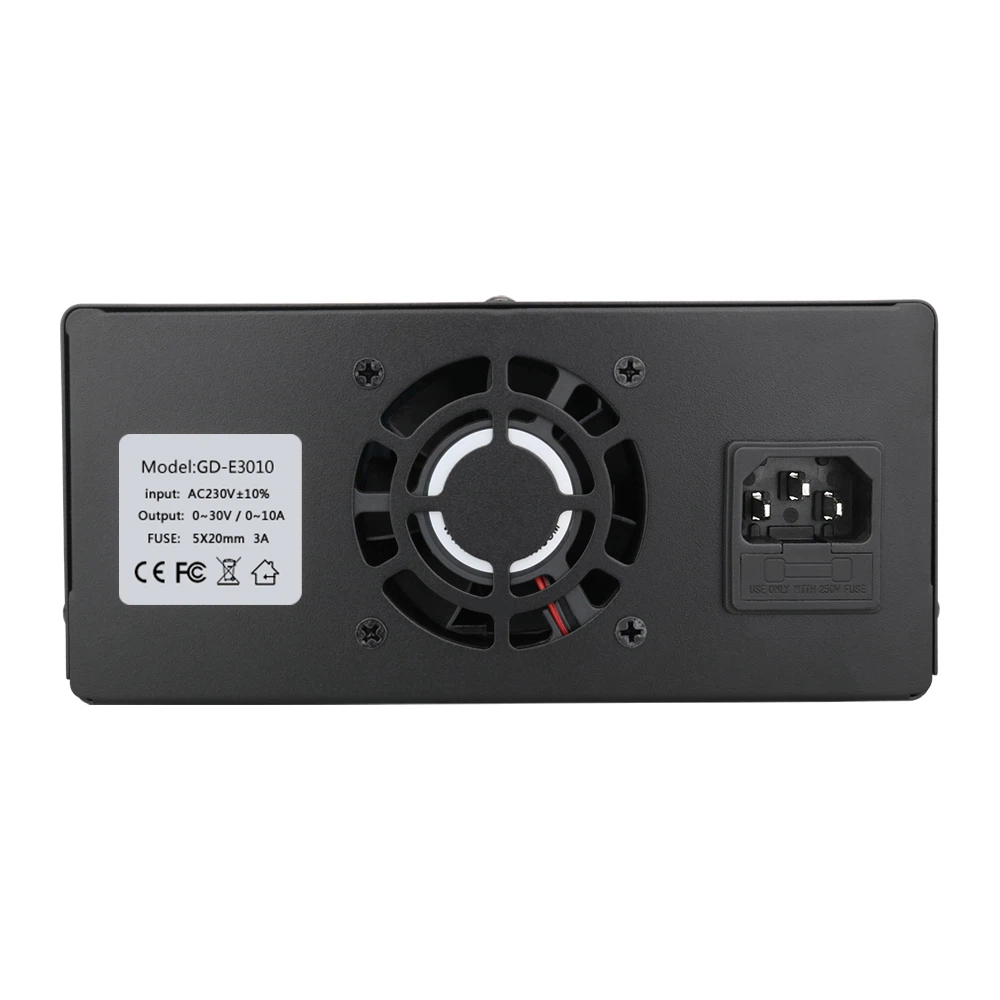
0V/3A Constant-Voltage / Constant-Current Adjustable DC Regulated Power Supply
Main circuit: Figure 1 consists of 1M31 7, Q1, and Q2. It is a typical current expansion application circuit of 1M317. The reason for not using the currently popular high-power voltage regulator integrated circuit 1M338 is that its overcurrent protection function is too sensitive, entering the protection state when it instantly exceeds 5A. However, the starting current of small electric tools (such as small drills and DC motors) often exceeds 5A and cannot carry inductive loads, which I have already tested. If the sampling resistor R6 of the ammeter is wound with copper wire, the resistance value is too small. Even if it is precisely measured with an electric bridge beforehand, adding the contact (solder joint) resistance will exceed the error range. Here, a 0.12 Ω cement resistor is used, and the voltage drop generated by the current is adjusted by RP3 and sent to a voltmeter with a full voltage of 2V, with a full current of 20.00A.
The control circuit is shown in Figure 2. The constant current control circuit consists of a comparator of voltage comparator 1M393, RP4 is a current adjustment potentiometer, and the precision voltage reference (about 2.5-2.6V) generated by IC5 is divided by RP3 and sent to the inverting input terminal of IC6. The current sampling voltage generated by RP4 voltage division is sent to the in-phase input terminal of IC6. If the actual current exceeds the set constant current value, IC6 outputs a high level, Q4 conducts, and 1M317 adjusts the terminal potential to decrease → output voltage decreases → output current decreases until the actual current equals the set current value. At the same time, Q3 is conducting, and the LED VD6 displays a constant current state.
Short circuit protection function: 1M317 itself has a complete protection function, but it cannot protect the expansion power transistor when the output is short circuited.
When a short circuit occurs, the output current is much greater than the set current value, causing Q4 to conduct completely. The output of 1M317 is small value (about 1.2V). At this time, the measured short-circuit current value displayed is about 4-5A. Although the short-circuit current is limited, there is still a danger due to the large dissipation power of the expansion power transistor for a long time. It is recommended to install an output short-circuit protection fuse (5A).
J2 is a current setting/display conversion relay. When in position 1, the voltage drop of current sampling resistor R6 is adjusted by RP3 and sent to the ammeter to display the current actual current. When in position 2, the voltage on current adjustment potentiometer RP4 is sent to the ammeter, displaying the set current value. An ammeter is a voltmeter with a full voltage of 2V. The other comparator of 1M393 constitutes the fan control circuit, and here a hysteresis comparison circuit is used. The circuit in the diagram can automatically start the fan at 55 ℃ and stop it below 45 ℃. This reduces noise and improves the lifespan of the fan. A negative temperature coefficient thermistor with an RH of 820 ohms should be fastened to the heat sink. The operating temperature can be selected by adjusting the resistance corresponding to the hysteresis comparator.
Touch button control circuit: Considering the comfortable operation feel, the ordinary button/toggle switch is not used, and a touch switch+digital control circuit+relay mode is adopted. The circuit is shown in Figure 3.