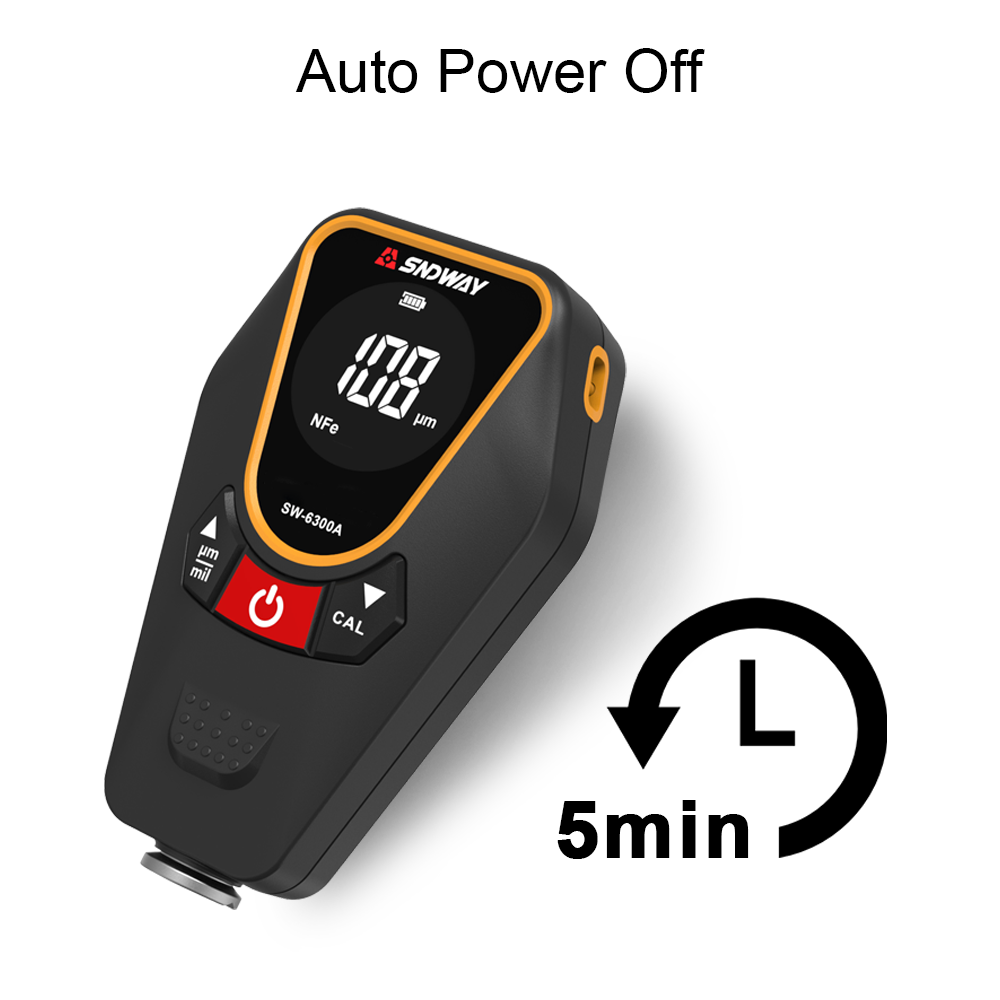
4 Summary of Correct Use of Coating Thickness Gauge
1. Why do the coating thickness gauges that have passed the verification of the Institute of Metrology and Testing have a large difference in the measured data during actual use?
This is also a frequently encountered problem. Generally, there are two types of customers who buy thickness gauges. One is the expansion of production and the need to increase the number of thickness gauges. The other is product demand and newly purchased coating thickness gauge equipment. The situation we encountered is mainly for the first type of customers, because the newly purchased thickness gauge and the previously used thickness gauge are not necessarily the same model,
Such a problem occurs because the base point selected for calibration of the coating thickness gauge before measurement is different from the calibration standard sheet. In order to maintain consistency, the coating thickness gauge should use the same calibrated zero point substrate for zero point calibration, and also use the same standard plastic film to calibrate and calibrate on the same calibration substrate, so that the measurement data of the coating thickness gauge will be unified.
2. Why is the data measured by the coating thickness gauge certified by the National Institute of Metrology and Testing still inaccurate in actual use?
Generally speaking, customers think that it has been certified by the state. Generally, the validity period is one year. It is definitely no problem to use it within this year. In fact, in the actual use process, calibration must be done before each use. If you do not do this, the measurement result will have a 3-10% error. 0 microns, it is quite obvious that the instrument will feel inaccurate, so it is necessary to calibrate before each use. We recommend that the appraisal cycle of the coating thickness gauge is generally one year.
3. The coating thickness gauge is calibrated before each use, but the measurement data is still inaccurate?
This kind of problem is very common. Generally speaking, customers use the random calibration substrate of the thickness gauge to calibrate. In this way, the substrate of the customer’s own product is required to be exactly the same as the material of the random substrate. This situation is basically impossible. This is what we want to emphasize. The customer must choose the same uncoated (or plated) workpiece as the measured product for zero calibration, and then calibrate it with a calibration ring and plastic film, so that the measurement data is reliable. Be sure to use the calibration matrix with the same shape (curvature), same material, and same roughness for zero point calibration.
4. Is the certified coating thickness gauge sure to have no problems in actual use?
When verifying the coating thickness gauge, generally speaking, the inspector has a set of accurate calibration sheets to verify the coating thickness gauge. The coating thickness gauge is qualified and the infrared thermometer is certified.