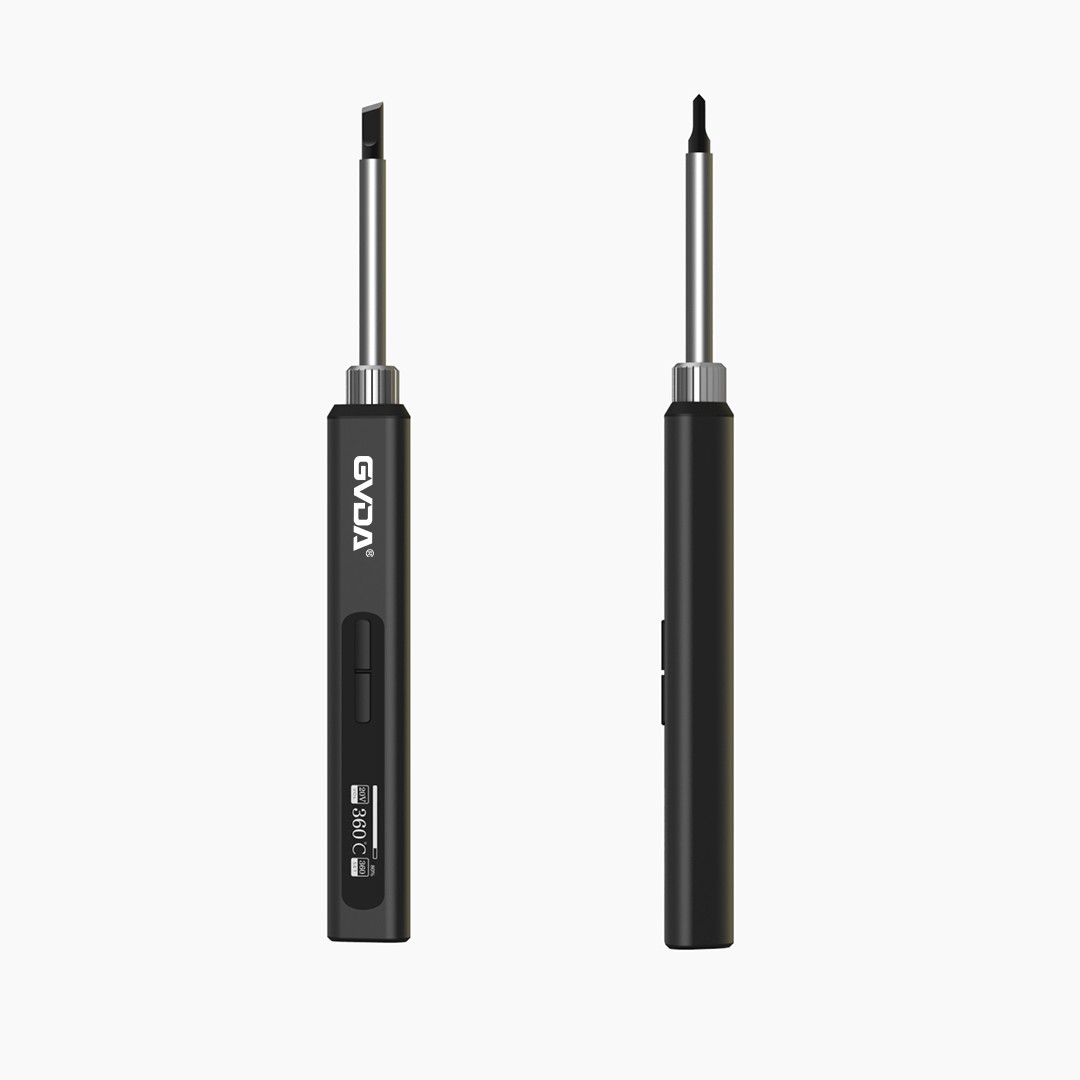
9 key points for using a soldering iron to prevent poor welding
1. Choose appropriate solder, low melting point solder wire for welding electronic components.
2. Flux, use 25% rosin dissolved in 75% alcohol (weight ratio) as the flux.
3. The electric soldering iron must be tinned before use. The specific method is: heat the electric soldering iron. When the solder has just melted, apply flux, and then apply the solder evenly on the soldering iron tip so that the soldering iron tip can be evenly coated. A layer of tin.
4. For welding method, polish the pads and component pins cleanly with fine sandpaper and apply flux. Dip an appropriate amount of solder with the tip of the soldering iron and touch it to the solder joint. After all the solder on the solder joint melts and immerses the lead of the component, gently lift the tip of the soldering iron upward along the lead of the component and away from the solder joint.
5. The welding time should not be too long, otherwise it is easy to burn the components. If necessary, use tweezers to clamp the pins to help dissipate heat.
6. The solder joint should be in the shape of a sinusoidal wave peak, the surface should be bright and smooth, without tin thorns, and the amount of tin should be moderate.
7. After the soldering is completed, use alcohol to clean the remaining flux on the circuit board to prevent the carbonized flux from affecting the normal operation of the circuit.
8. The integrated circuit should be soldered last, and the soldering iron should be reliably grounded, or the residual heat should be used for soldering after power failure. Or use a special socket for integrated circuits, and then plug in the integrated circuit after soldering the socket.
9. The soldering iron should be placed on the soldering iron stand.
How to hold a soldering iron
(1) How to hold the pen. Suitable for lightweight soldering irons such as 30W internal heating type. Its soldering iron head is straight, and the head end is filed into a bevel or cone shape, which is suitable for soldering pads with a small area.
(2), fisting method. It is suitable for high-power soldering irons. We generally do not use high-power soldering irons in electronic production (not introduced here).