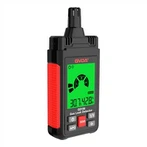
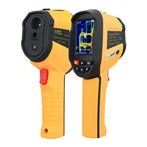
A brief discussion on the problem of leakage and electricity theft using clamp meters
Regarding the use of a clamp ammeter, use a clamp ammeter to check whether there is leakage in low-voltage lines and whether there is any leakage in the line. The main operations include measuring leakage current, determining the location of leakage, and detecting whether there is leakage in the user's internal circuits and equipment, etc. .
Clamp ammeter to check leakage and electricity theft problems
1. Determine whether the residual current action protector is normal
At the distribution transformer, disconnect the fuse on the phase line on the outlet side of the AC contactor that controls the low-voltage line. If the residual current action protector can be put into normal operation at this time, it means that the residual current action protector is good; otherwise , the residual current action protector should be inspected and replaced.
2. Measure leakage current
At the distribution transformer, disconnect the neutral wire on the outlet side of the AC contactor that controls the low-voltage line. Then install the removed fuse core on one of the phases and measure the phase with a clamp ammeter. The measured current is the leakage current of the phase.
Finally, according to the same method, measure the leakage current of the remaining leakage phases in sequence.
In order to prevent the phase wire from being grounded on the line and causing large current to damage the instrument, the clamp ammeter should be placed on a large current block during inspection; if the detected current is small, gradually reduce the gear.
3. Determine the location of leakage
After determining the phase line with leakage, you can further determine the location of the leakage.
(1) Detect at the distribution transformer.
At the distribution transformer, insert the fuse core into the phase line to be inspected, disconnect the fuses of the neutral line and the other two phases, and use a clamp meter on the pole to detect the live phase line to determine the location of the leakage.
In order to improve efficiency, the climbing pole position can be selected in the middle of the line. Through detection, it can be determined whether the leakage part is in the first half or the second half of the line, and then the line section where the leakage is suspected is detected, and so on, to narrow the detection range.
Finally, the phase line pillar insulators within a determined smaller range are detected, and the subscriber line phase lines connected to the phase lines within the range are detected. This can be done on the ground, or at the same time as the insulators are being detected. To determine the specific location of the leakage.
(2) Detect at the user wiring location.
When low-voltage lines are transmitting power, clamp meters can also be used to detect the connection lines of low-voltage subscriber lines within the range of suspicion.
When testing, the phase wires and neutral wires of single-phase power users should be placed in the jaws of the clamp meter at the same time, and the three phase wires and neutral wires of three-phase power should also be placed in the jaws at the same time.
If there is no leakage fault, the vector sum of the load current magnetic flux is zero, and the clamp meter indication is also zero; if there is leakage current, the clamp ammeter can detect the leakage current.
4. Check whether there is any leakage in the user's internal circuits and equipment
The specific method is to use a clamp meter to measure the leakage current at the user's power entry line, and at the same time put the user's electrical equipment and lamps in and out one by one, and look at the clamp meter to detect changes in the leakage current to find the leaking equipment. and lighting fixtures.
If all the equipment and lamps tested are good, or the equipment with leakage has been removed, but the clamp ammeter shows that the user still has leakage current, it is possible that the user's low-voltage line has leakage, and should be carried out according to the specific situation. deal with.
For leakage faults in pre-buried and concealed pipelines, the only solution is to replace or rewire them.
5. Issues that need attention when checking for leakage and electricity theft
When looking for leakage faults, the AC contactor controlling the low-voltage line needs to forcefully send power for a short period of time.
When looking for leakage faults, pay attention to safety. Someone must supervise and take safety protection measures. Note that when reading clamp meter data, be sure to keep a safe distance between the human body and live parts.