A Simple Method to Distinguish the Neutral Wire and the Live Wire with a Multimeter
Generally speaking, a low-voltage test pen is necessary to distinguish the neutral wire and the live wire in the mains supply. Can a multimeter be used to distinguish them? The answer is yes. The methods are as follows:
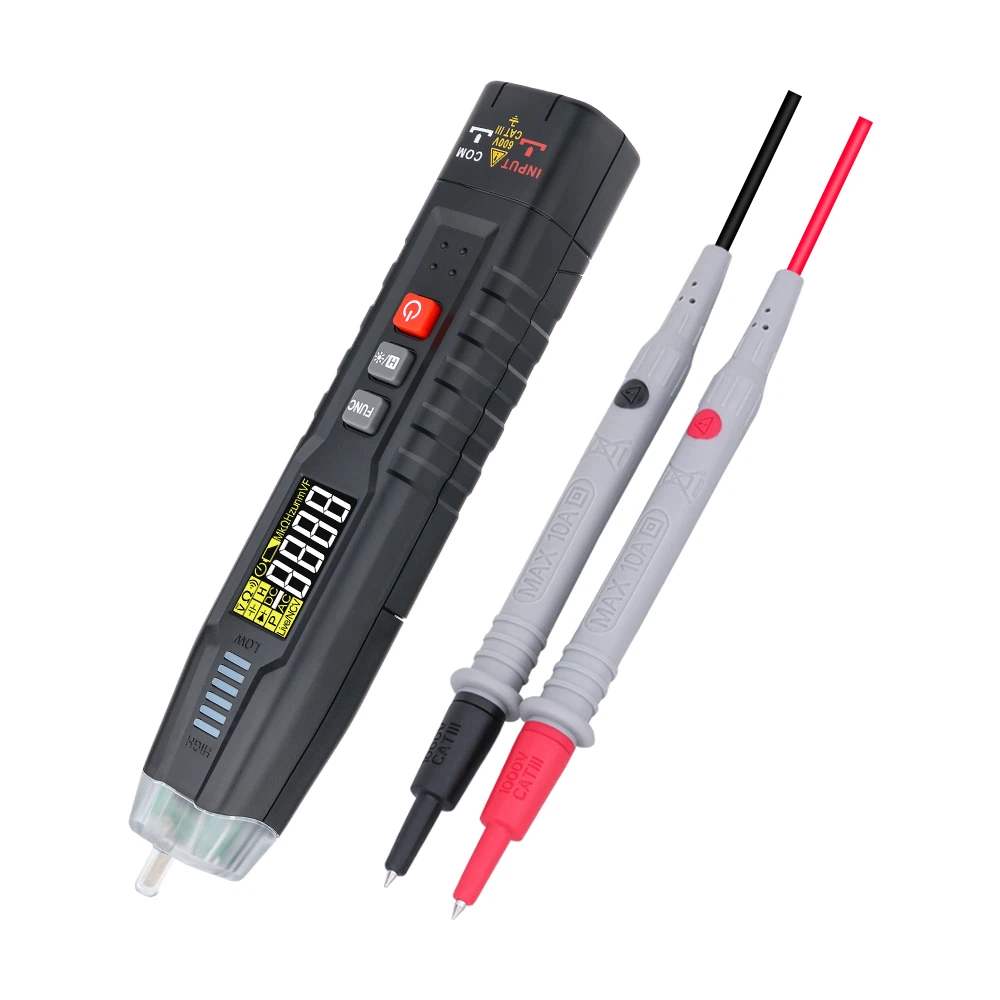
Set the range switch of the multimeter to the AC voltage range of 250V or 500V. Connect the black test lead to the indoor water pipe, a damp floor, the ground, etc. Touch the red test lead to the power cord or the power socket hole. The wire corresponding to the higher voltage value indicated by the multimeter is the live wire, and the wire with a lower voltage value or zero voltage is the neutral wire.
Set the multimeter to the 250V AC voltage range. Connect one test lead to the wire and the other to the wall or the ground. (If the wall or the ground is very dry, you can moisten it with water to get a more obvious result.) If the pointer of the multimeter doesn't move, it means the wire is the neutral wire; if the pointer deflects, it indicates that the wire is the live wire.
When we need to distinguish the live wire and the neutral wire but don't have a test pen at hand, we can complete the test with just a multimeter. There are three methods, which are described as follows:
The first method: If you only have a multimeter but no test pen, and the voltage is normal, you can use the multimeter to distinguish the live wire from the neutral wire. Connect one test lead of the multimeter to the live wire or the neutral wire, and the other to the ground, the wall, a metal water pipe, etc. If there is a voltage (usually greater than 20V), it is the live wire; if there is no voltage, it is the neutral wire.
The second method: First, let's understand the principle of a test pen. A test pen consists of a metal rod, a neon bulb, a carbon resistor, and a metal cap. The neon bulb is the device that can emit light, which is a glass bulb filled with inert gas. The resistance of the carbon resistor is 1M ohm or more. The metal cap is the part that a person's hand touches. When a person touches the metal cap, the live wire, the test pen, the human body, and the earth form a circuit. There is a capacitance of about 100PF between the human body and the earth, and this is how the circuit is formed.
When using a multimeter for measurement, whether it is a digital or an analog multimeter, after knowing the approximate range of the supply voltage, taking the 220VAC voltage as an example, set the multimeter to the 400VAC range. Connect the red test lead to the live wire or the neutral wire, and touch the black test lead with your hand. If the multimeter shows a reading, it means it is the live wire; if there is no reading, it is the neutral wire.
This method won't cause any danger to the human body. The reason is that the internal resistance of a digital multimeter is 10M ohm, and the internal resistance of an analog multimeter is 20K ohm/V. If the measured voltage is 220V, the internal resistance of the analog multimeter is 20K × 220V = 4400 ohm, which is absolutely safe because the internal resistance of the carbon resistor in a test pen is generally 1M ohm.