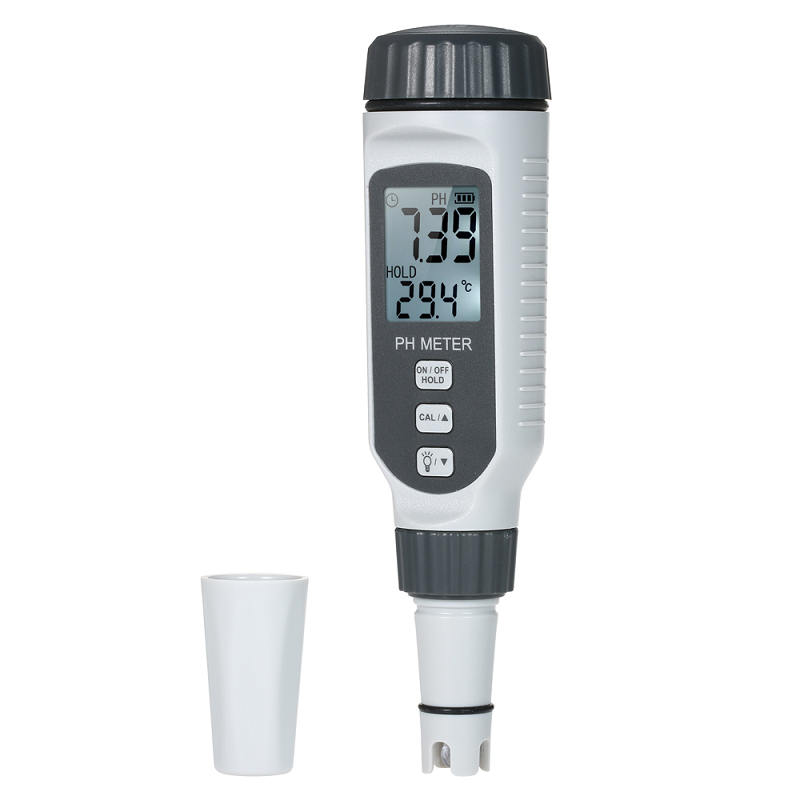
Methods for Reducing Measurement Errors of pH Meters
1. Inspection of pH meter
When laboratory personnel use an acidimeter to measure the pH value of a solution, if they do not trust the results, they can use the following method to distinguish, that is, to measure one or two pH standard solutions. If the error of the pH standard solution measured is very small, it indicates that the acidity meter measurement result is reliable. On the contrary, if there is a large error in measuring the pHs standard solution, it indicates that there is a problem with the pH meter, electrodes, and part of the pHs standard solution in the pH meter | acidity meter. Check them one by one according to the following methods.
(1) For electric meters, in addition to obvious faults, attention should be paid to the following issues: firstly, the temperature compensator should be placed accurately, and the rotation should not be loose; The second is a pH meter with slope correction. When using the one point positioning method to measure a solution, the slope should be placed at the 100% position; The third is to pay attention to whether the glass electrode socket is in good contact.
(2) For a pH glass electrode in an electrode, it should be checked whether the silver chloride reference electrode is immersed in the solution inside the glass electrode. For the calomel electrode, attention should be paid to whether there are bubbles inside the tube, whether the salt bridge is blocked, and whether the contact piece of the calomel electrode is oxidized. Good electrodes can also be used to replace measurements one by one for discrimination.
(3) For pHs standard solution, it should be re prepared, and a calibrated acidity meter can also be used to measure and distinguish the error of the standard solution. In general, the possibility of significant errors in pHs standard solution is small.
2 Instrument maintenance
Regular and correct use and maintenance of instruments can ensure their normal and reliable use, especially for instruments such as pH meters, which have high input impedance and require frequent exposure to chemicals in the environment, so they need to be maintained reasonably.
(1) The input end of the instrument (measuring electrode socket 6) must be kept dry and clean. When the instrument is not in use, insert the Q9 short-circuit plug into the socket to prevent dust and moisture from entering.
(2) The electrode converter (optional) is designed for use with other electrodes and should be moisture-proof and dust-proof.
(3) When measuring, the lead wire of the electrode should be kept stationary, otherwise it may cause measurement instability.
(4) The power supply used by the instrument should have a good grounding.
(5) The instrument adopts MOS integrated circuit, so it should be ensured that the circuit iron has good grounding during maintenance.
(6) When calibrating an instrument with a buffer solution, it is important to ensure the reliability of the buffer solution and avoid mixing it incorrectly, as this may result in measurement errors.