basic microscope
It is regarded as the original microscope. In the seventeenth century, Leeuwenhoek invented it. Convex lenses and frames were integrated. Special species can be 200–300 times magnified (more like a magnifying glass). Because they can reveal information about biological material, microscopes are incredibly straightforward but extremely effective tools.
A basic microscope is used by a watchmaker to see and magnify small watch parts. It is also used by specialists in the jewelry and skin industries. Images of letters in books, the textures of fibers and threads, and the finer details of stamps and engravings can all be enlarged with this technique. Since the invention of other microscopes with a second lens, which enhances image quality, basic microscopes are no longer utilized.
atomic-scale microscope
In a compound microscope, a lamp positioned underneath illuminates the slide. Two lenses—one near the slide, known as the objective, and one near the top, known as the eyepiece—are used to magnify the sample. They offer a two-dimensional image that can be altered depending on the lens's power.
Compound microscopes come in a variety of designs but are often quite basic, making them simple to operate for anyone. The benefit of compound microscopic microscopes is that they may be enlarged to greater magnifications and are inexpensive for students, enthusiasts, and scientists. Their lesser resolution means that, similar to more sophisticated microscopes, the image will never be sharp.
fluorescent imaging system
British scientist George G. Stokes originally defined fluorescence in 1852. When he noticed that the mineral fluorspar shone red when activated by UV light, he came up with the name "fluorescence." He emphasized that fluorescence emission has a longer wavelength than excitation light. Because it can see the fluorescence given off by target molecules, fluorescence microscopy is a unique technique. To do this, particular fluorescent chemicals are added to the target cells, causing them to glow when excitation light is shone onto them.
The autofluorescence of substances like chlorophyll, vitamin A, collagen, riboflavin, etc. allows for their observation under this microscope without the introduction of fluorescent pigments. Other components such as cellulose, glycogen, proteins, carbohydrates and Y chromosomes also need to be stained using fluorescent dyes. Specific proteins in cells can be seen using fluorescent dyes.
microscope with confocals
Contrary to a stereo and compound microscope, confocal microscopy uses visible light from a laser source. In order to scan the sample with a laser and combine the resulting image into a computer for screen projection, microscopes have a number of scanning mirrors. The microscope in question lacks eyepieces. They offer a two-dimensional image that can be altered depending on the lens's power.
The word "confocal" refers to the way that this microscope eliminates defocused signals in contrast to fluorescence microscopy by using point illumination and pinholes in an optically conjugated plane in front of the detector. The optical resolution of the image is substantially higher than with wide-field microscopy because fluorescence light can only be detected very closely to the focal plane. However, because the pinhole blocks most of the sample fluorescence's light, the greater resolution comes at the expense of a weaker signal, necessitating lengthy exposures.
electronic microscope
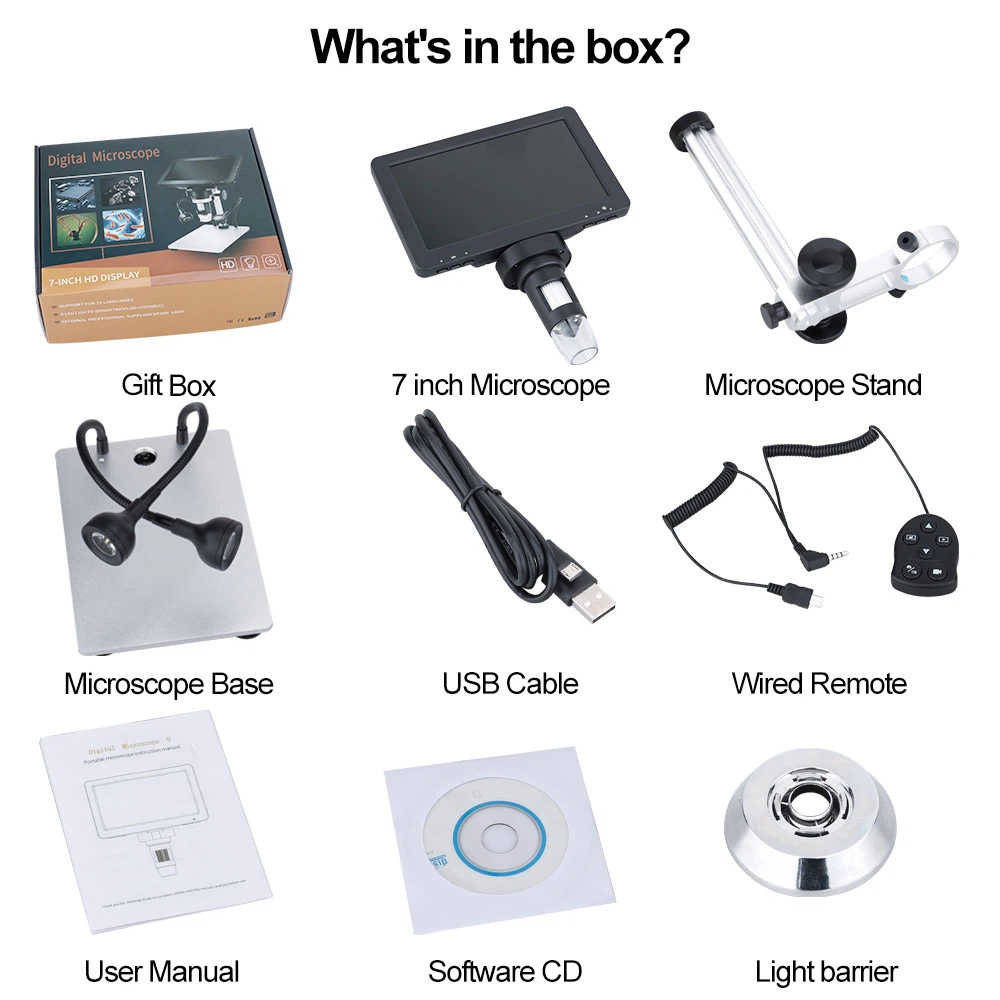
In 1986, the digital microscope was created in Japan. It makes use of a computer to perceive things that the human eye cannot. They can be found in either with or without eyepieces. It can be connected to a computer monitor using a USB cable. It can be shown as an expanded sample on a computer screen with the aid of computer software. Both still images and moving photographs can be captured and stored in the computer's memory. Email allows for the longer-term storage of stored photographs. Researchers, students, amateurs, and manufacturers can all use it.