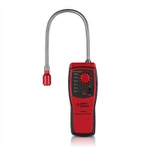
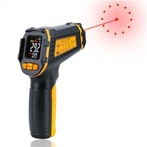
Many different kinds of gases will be created in the industrial sector. Some of these gases are toxic and hazardous, causing mild to severe impairment to both human life and health and the atmospheric environment. Some of them are explosive and flammable gases. A gas explosion mishap could happen if there are additional detonating elements, which would adversely compromise the factory's property safety. Accidents like casualties will happen at a factory with workers, having negative impacts. As a result, manufacturers must utilize a variety of gas detectors for effective prevention and management of gas leaks.
As was already mentioned, different types of gases are created in the industrial sector, hence different gases have different gas detectors. The following categories make up the majority of the gas detectors that Chicheng Electric now sells, as determined by various sensors. Infrared gas sensor, electrochemical gas sensor, semiconductor gas sensor, and gas sensor for catalytic combustion. Each of these four categories of gas sensors has unique qualities.
3. Semiconductor gas sensor
A gas sensor that uses a semiconductor gas sensor as a sensitive element is called a semiconductor gas sensor. On gas detectors, it is a typical gas sensor. It has been widely employed in appliances that detect flammable gas leaks in households and factories. It can be used to detect hydrogen, liquefied gas, methane, and other substances.
2. Catalytic combustion gas sensor
Catalytic combustible gas sensor utilizes the thermal effect principle of catalytic combustion, and is composed of a detection element and a compensation element to form a measurement bridge. When it rises, the resistance of the platinum wire inside it also rises accordingly, so that the balance bridge is out of balance, and an electrical signal proportional to the concentration of combustible gas is output. Catalytic combustion gas sensors are mainly used in the detection of combustible gases. The sensor has the advantages of good output signal linearity, reliable index and low price. Moreover, catalytic combustion gas sensors will not cross-contaminate with other non-combustible gases.
3. Electrochemical gas sensor
The electrochemical gas sensor is a sensor that measures the current by oxidizing or reducing the gas to be measured at the electrode to obtain the concentration of the object gas.
4. Infrared gas sensor
An infrared gas sensor is a gas sensing device that uses the relationship between gas concentration and absorption intensity to identify individual gas components and calculate their concentration. It does this by choosing absorption characteristics based on the near-infrared spectrum of various gas molecules. Infrared gas sensors offer a wide range of applications, a long service life, a high sensitivity, strong stability, and the capacity to detect more gases than electrochemical, catalytic combustion, semiconductor, and other sensors. They also have a high cost performance and low maintenance costs. Operators in the field and in factories will find it easy to utilize. Petrochemical, metallurgical, industrial, mining, air pollution monitoring, agricultural, medicinal, and other areas employ infrared gas sensors extensively.