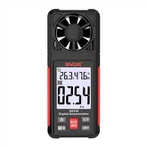
Anemometer sensor structure and principle
Anemometers can provide the most original recorded wind speed and direction data in hydrometric stations, environmental protection, agriculture, forestry, power plants, islands, transportation, mines and other industries.
The sensor of the anemometer adopts the traditional two-cup rotating frame structure. It converts the wind speed into the rotational speed of the rotating frame.
In order to reduce the start-up wind speed, the lightweight wind cup and jewel bearing support of special materials are used. After being detected by the sensor, the device fixed on the rotating frame transmits the signal to the host for calculation.
The single-chip microcomputer in the anemometer samples, corrects and calculates the output signal of the wind sensor;
After that, the instrument outputs 5 parameters of instantaneous wind speed/one-minute average wind speed/instantaneous wind level/one-minute average wind level/wave height corresponding to the average wind level.
The measured parameters are directly displayed digitally on the liquid crystal display of the instrument.
In order to reduce the power consumption of the instrument, the sensor and the one-chip computer in the instrument have adopted a series of special measures to reduce power consumption.
In order to ensure the reliability of the data, when the power supply voltage is too low, the battery mark on the lower part of the display will show power shortage, prompting the user that the power supply voltage is too low and the data is unreliable, and the battery needs to be replaced in time.