Applicable methods and classification of gas detectors in air testing
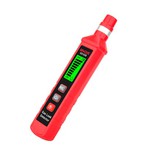
In the air test gas detector applicable methods and classification Gas detector can detect hydrogen sulfide, carbon monoxide, oxygen, sulfur dioxide, phosphine, ammonia, nitrogen dioxide, hydrogen cyanide, chlorine, chlorine dioxide, ozone and combustible gases and other gases, widely used in petrochemicals, coal, metallurgy, chemical industry, municipal gas, environmental monitoring, and other sites on-site detection. It can realise the measurement needs of special occasions; it can detect the concentration or leakage in pits, pipelines, tanks, confined spaces and so on.
Measurement of the absorption spectrum to identify the type of gas; measurement of the absorption intensity to determine the concentration of the gas being measured. Infrared detector of the use of a wide range, not only can analyse the gas composition, but also can analyse the solution composition, and high sensitivity, rapid response, can be online continuous indication, can also be composed of regulating system. The detection part of the infrared gas detector commonly used in the industry consists of two side-by-side optical systems with the same structure.
One is the measuring chamber and the other is the reference chamber. The two chambers open and close the optical path simultaneously or alternately with a certain period by means of a light-cutting plate. When the measured gas is introduced into the measuring chamber, light with wavelengths specific to the measured gas is absorbed, thus reducing the luminous flux through the optical path of the measuring chamber into the infrared receiving gas chamber. The higher the gas concentration, the lower the luminous flux into the infrared receiving gas chamber; while the luminous flux through the reference chamber is certain, the luminous flux into the infrared receiving gas chamber is also certain. Therefore, the higher the concentration of the measured gas, the greater the difference in luminous flux between the measurement chamber and the reference chamber. This difference in luminous flux is projected into the infrared receiving gas chamber with an amplitude of vibration of a certain period. The receiving gas chamber is separated into two halves by a metal film several microns thick, in which a gas with a large concentration of the component to be measured is enclosed, and the infrared rays injected into the chamber are all absorbed within the absorption wavelength range, so that the pulsating light flux is changed into a cyclic change of temperature, and then the change of temperature is converted into a change of pressure according to the gaseous equation and detected by capacitive sensors, and then the concentration of the gas to be measured is indicated by an amplified process. In addition to capacitive sensors, can also be used to directly detect infrared quantum infrared sensors, and the use of infrared interference filters for wavelength selection and with adjustable lasers as a light source, the formation of a new all-solid infrared gas detector. This type of detector can complete the measurement of gas concentration with only one light source, one measuring chamber and one infrared sensor. In addition, if multiple filter discs with different wavelengths are used, the concentration of various gases in multi-component gases can be measured simultaneously.