Application of Clamp Ammeter in High Voltage System
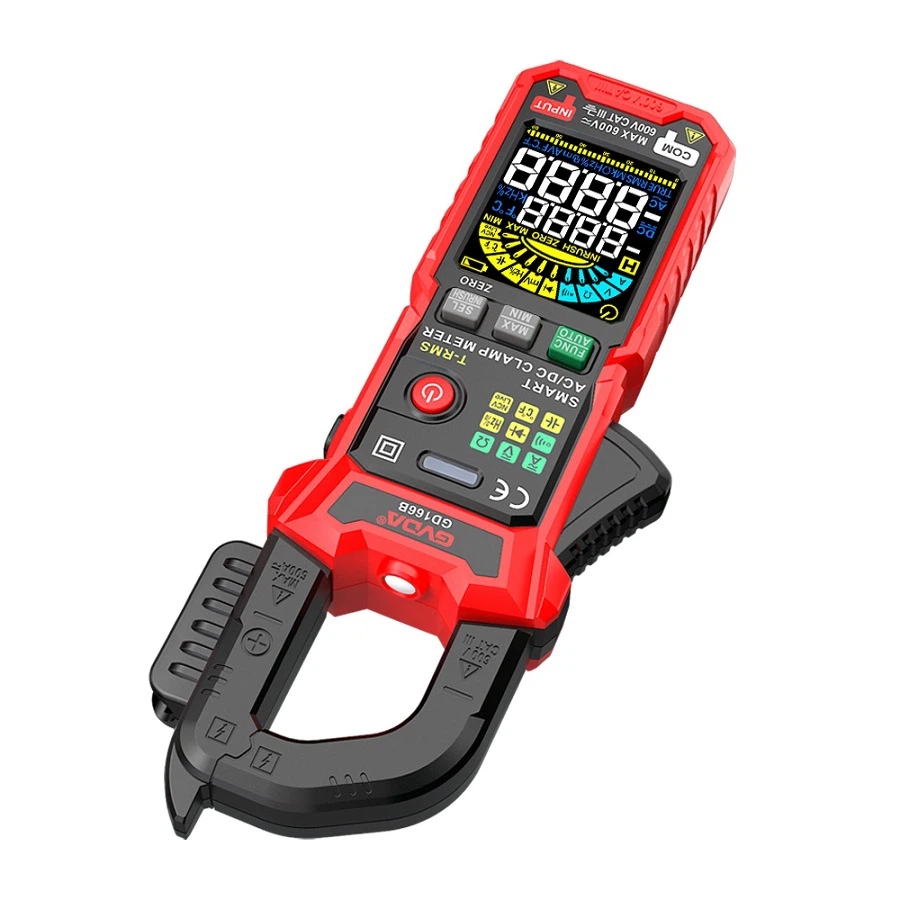
Clamp Ammeter must be a special high-voltage clamp Ammeter to test the high-voltage system. Must have: high precision, strong stability, strong anti-interference ability, and insulation protection. While ensuring on-site measurement, there is also a high requirement for the accuracy of test data.
Application of clamp Ammeter in high-voltage system:
1. Suitable for measuring high and low voltage systems up to 60KV, using a complete set of protective insulation rods for testing high voltage; For low-voltage systems below 600V, the AC current and leakage current of the line can be directly tested with a high-voltage clamp meter, which is equivalent to a high-precision low-voltage Ammeter.
2. Measure the line current of the high-voltage system, measure the online current, and also have the functions of peak holding, data holding, storage, wireless transmission, etc. Its special clamp Ammeter can easily clamp or withdraw the measured conductor by pressing or withdrawing the insulating rod.
3. It can be used as high and low voltage current transformer ratio tester and zinc oxide arrester tester. High precision clamp watch with a minimum range of 10 microamps.
High voltage clamp Ammeter is an indispensable measuring instrument for measuring the current value of high voltage lines, so the instrument should be maintained regularly. And high-voltage testing personnel must follow the operating procedures and obtain relevant national high-voltage operation certification before conducting on-site testing
Tips for using clamp Ammeter:
(1) Before testing the circuit, check whether the insulation shell of the clamp gauge iron core is intact and undamaged. Check if the jaws are securely closed.
(2) Opening the instrument panel and displaying "OL" indicates that the instrument panel is functioning properly and can be tested
(3) When measuring, try to pass the measured wire through the center of the clamp as much as possible. You can test several times and read the value to make the reading accurate.
(4) When measuring a small current, if conditions permit, the wire can be wound a few more turns and then clamped with pliers. The value tested in this way is a multiple of the number of wire turns, and the value is relatively accurate
(5) After the inspection is completed, close the instrument and clean the jaws so that the instrument is in good condition for the next use.