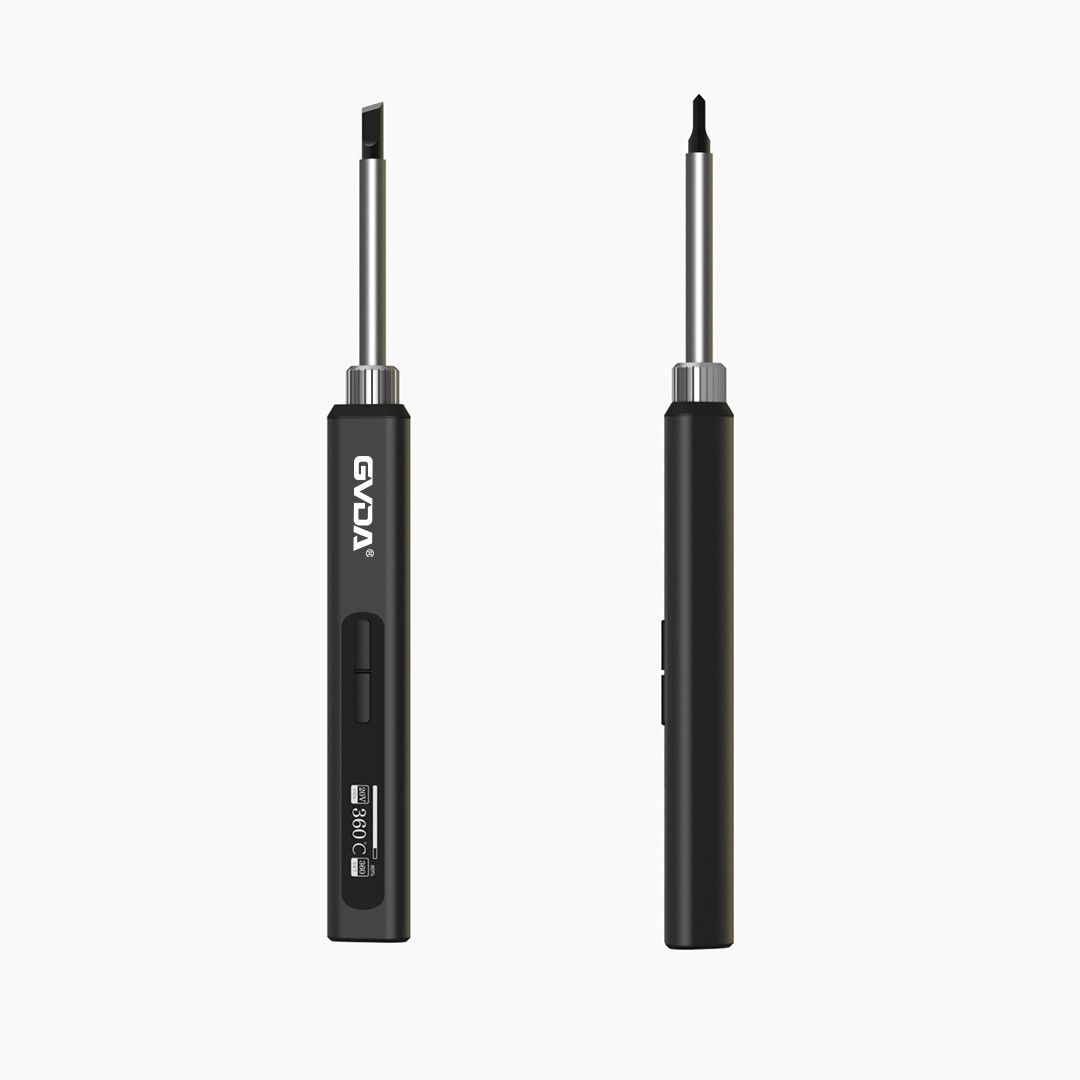
Selection Guide for Household Electric Soldering Irons
Working principle: As shown in the figure, when the temperature of the welding head is below the constant temperature value, the magnetic temperature sensor connected to the welding head end attracts the permanent magnet, causing the contacts on the magnetic steel connecting rod to be connected, and the power is supplied to the heating element, gradually increasing the temperature of the welding head. When the temperature is above the constant temperature, the heating element loses its magnetism, the power is cut off, and heating stops. This repeatedly turns on or off the power supply, heats up and cools down, and keeps the soldering iron at a constant temperature. By changing the model of the heating element, different constant temperature values can be obtained.
Magnetic steel switch
Thermostatic soldering iron has the advantages of energy saving, high efficiency, low consumption, and long service life, making it an ideal soldering tool for electronic product production and electronic repair industry.
How to choose an electric soldering iron?
(1) When soldering integrated circuits, transistors, and their heat sensitive components, consider using a 20W internal heating or 25W external heating soldering iron.
(2) When welding thicker wires or coaxial cables, consider using a 50W internal heating or 45-75W external heating soldering iron.
(3) When welding larger components, such as metal chassis grounding pads, a soldering iron with a power of over 100W should be used.
(4) The shape of the soldering iron tip should adapt to the requirements of the workpiece surface and the assembly density of the product.
Simply put, the power and type of electric soldering iron should be selected reasonably according to the welding object. If the workpiece is large, the power of the electric soldering iron used should also be higher. If the power is small, the welding temperature will be too low, the solder will melt slowly, the solder will not evaporate easily, and the solder joints will not be smooth and firm. This will inevitably result in poor appearance quality and welding strength, and even the solder cannot melt, making welding impossible. But the power of the soldering iron should not be too high. If it is too high, it will transfer too much heat to the workpiece, causing overheating of the solder joints of the components, which may cause damage to the components, detachment of the copper foil on the printed circuit board, and uncontrolled flow of solder on the soldering surface.