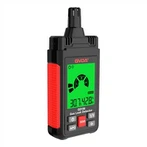
Application of Hydrogen Gas Detector in Industry
However, in the production and application of hydrogen energy battery, there may be the risk of H2 leakage. Leakage of H2 will reduce the performance of fuel cells, and H2 is a combustible gas, so too much deposition will cause great hidden safety risks. Therefore, in order to detect hydrogen leakage, a hydrogen detector must be used.
The hydrogen detector responds quickly and accurately to hydrogen gas leakage. When hydrogen gas leaks, it can give an alarm in time. It is the most commonly used gas detection instrument in the industrial field today. Mainly divided into the following three commonly used hydrogen gas detectors:
1. On-line hydrogen detection alarm
On-line hydrogen detection alarm is composed of gas detection alarm controller and fixed hydrogen detector. The gas detection alarm controller can be placed in the monitoring room to monitor and control each monitoring point. The hydrogen detector is installed in the place where gas leaks most easily, and its core component is the gas sensor.
2. Portable hydrogen detector
Portable hydrogen gas detector can be carried around and can continuously detect the hydrogen concentration in the working environment of the carrier. Hydrogen leak detector is a natural diffusion method, which adopts imported electrochemical sensor, with good sensitivity and repeatability. The hydrogen detector adopts embedded micro-control system with simple operation, perfect function and high reliability.
3. Pump-suction hydrogen detector
Pumping hydrogen detector adopts built-in suction pump, which can quickly detect hydrogen concentration in working environment. The pump hydrogen detector adopts imported electrochemical sensor, and the large liquid crystal display is clear, with sound and light alarm reminding, so as to ensure the detection of dangerous gas in the weak light working atmosphere and remind the operator in time to prevent the danger from happening.
The hydrogen detector converts the hydrogen concentration detected by the sensor into an electrical signal, which is transmitted to the gas detection alarm controller through a cable. The greater the gas concentration, the higher the electrical signal. When the gas concentration reaches or exceeds the alarm point set by the alarm controller, the gas detection alarm controller sends an alarm signal to start the external chain equipment such as solenoid valves and exhaust fans, and automatically eliminates hidden dangers. On-line hydrogen detection alarm is widely used in petroleum, chemical industry, metallurgy, electric power, coal mine, water plant and other environments to effectively prevent explosion accidents.