Applications of Metallographic Microscopes Across Diverse Industrial Sectors
Metallographic microscopes were first derived from metallography. Their primary purpose is to observe metallographic structures, making them specialized instruments designed exclusively for examining the metallographic structures of opaque objects such as metals and minerals. These opaque objects cannot be observed under ordinary transmission light microscopes; therefore, the key difference between metallographic microscopes and ordinary microscopes lies in the fact that the former uses reflected light for illumination, while the latter relies on transmitted light.
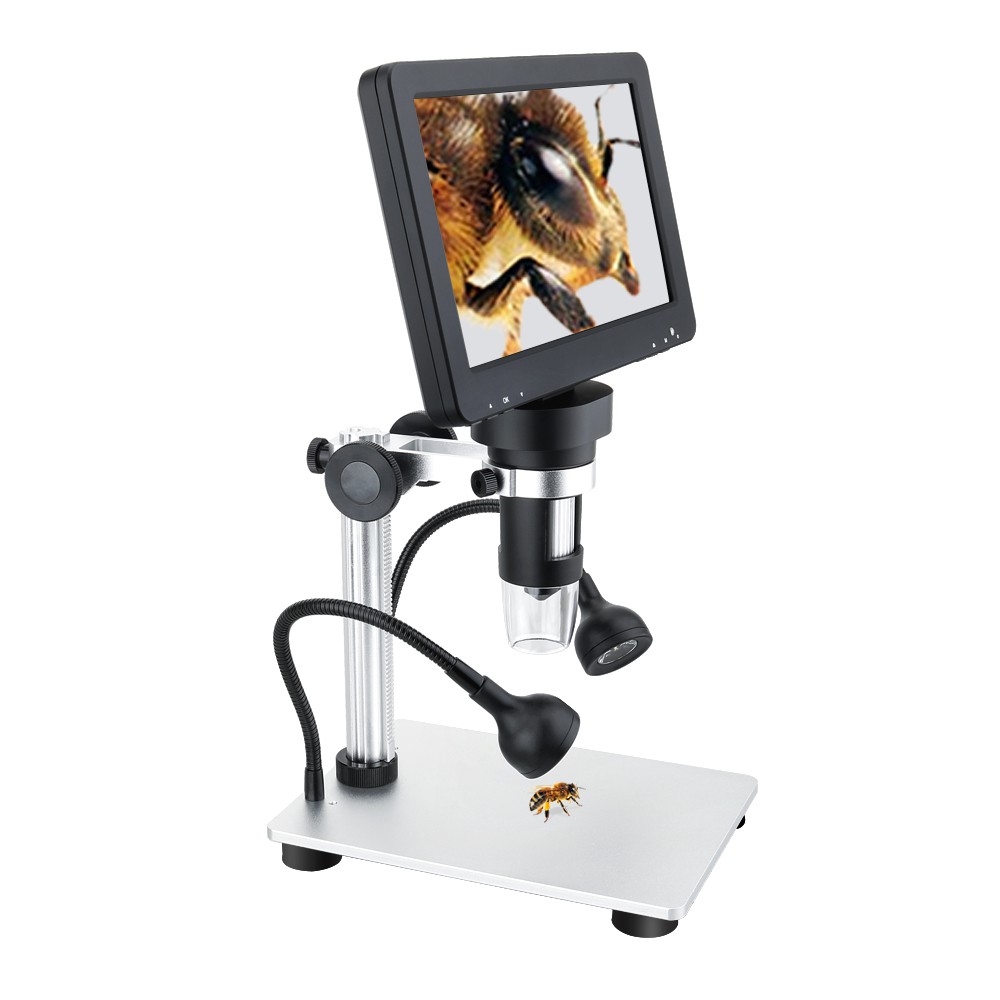
Metallographic microscopes are characterized by excellent stability, clear imaging, high resolution, and a large, flat field of view. In addition to microscopic observation through the eyepiece, they can also display real-time dynamic images on computer (or digital camera) screens. The required images can be edited, saved, and printed, with primary applications in fields such as hardware, metallographic sections, IC components, and LCD/LED manufacturing.
Metallographic microscopes are equipped with five types of objective lenses: EPI Brightfield Fluorescence, BD Brightfield/Darkfield, SLWD (Super Long Working Distance), ELWD (Enhanced Long Working Distance), and those with a correction collar. In the hardware industry, for hardware parts with severe reflection, BD Brightfield/Darkfield objective lenses can be selected for observation. For example, in the LCD industry, when observing and measuring conductive particles, metallographic microscopes can be equipped with DIC (Differential Interference Contrast) to achieve more three-dimensional imaging. DIC utilizes polarizing technology-paired polarizing filters form a polarized microscopic observation system. Based on the birefringent properties of objects, it directionally alters the optical path. However, polarization is only meaningful when used in conjunction with DIC; it serves no practical purpose alone. When metallographic microscopes are used for measuring and analyzing micro-sized objects such as IC components and metallographic sections, the intelligent software Iview-DIMS can be employed.
This software offers high precision, effectively reducing human measurement errors. It is easy to learn and use, enabling accurate measurement and analysis of relevant dimensions such as points, lines, arcs, radii, diameters, and angles. It also supports easy capture of measurement images and customization of various test reports.