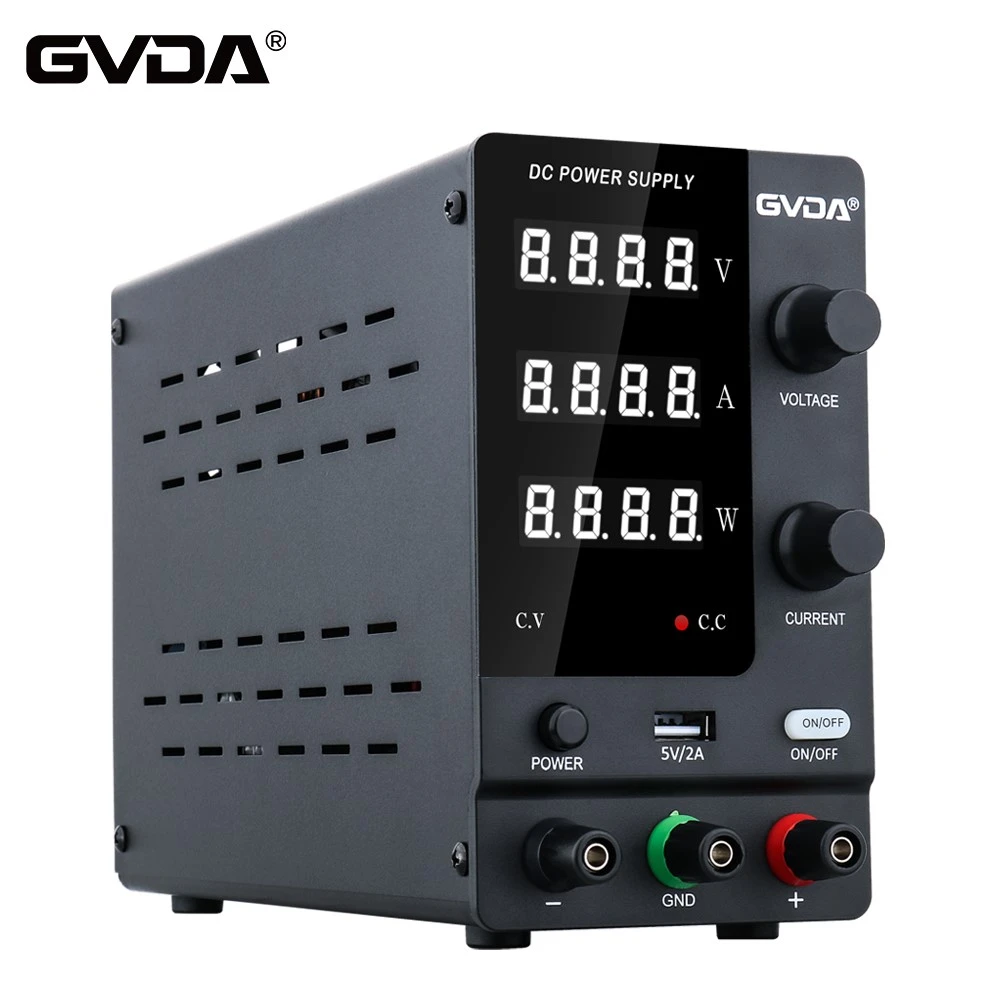
Basic knowledge of switching power supply
Switching power supply uses modern electronic power technology to control the time ratio of switching tube on and off. A power supply that maintains a stable output voltage. Switching power supplies generally consist of pulse width modulation (PWM) control ICs and MOSFETs.
Types of Switching Power Supplies
linear regulator
The so-called linear regulator, which is what we call LDO, generally has these two characteristics:
The transmission element works in the linear region, and it has no switch jumps.
For buck conversion only.
switching regulator
Pass device switches (FETs), fully on and fully off states in each cycle.
It includes at least one electrical energy storage element, such as an inductor or a capacitor.
Multiple topologies (buck, boost, buck-boost).
We know that all the energy will not disappear out of thin air, and the lost energy will eventually be transferred out in the form of heat. In this way, a larger heat sink needs to be added to the circuit. As a result, the volume of the power supply will become larger, and the efficiency of the whole machine is also very low.
If the switching power supply is in switch mode, not only can the efficiency be improved, but also the thermal management can be reduced.