Calibration, Operation, Common Faults and Troubleshooting of Digital Stereomicroscopes
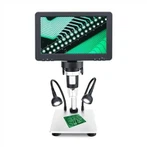
Stereoscopic microscope system is an organic combination of traditional optical microscope and computer (digital camera) through electronic eyepiece. It can not only perform microscopic observation through eyepiece, but also display real-time dynamic images of the observed object through computer, and edit, save and print the captured images. Digital stereomicroscope can produce upright three-dimensional spatial images when observing objects, with strong stereoscopic effect, clear and wide imaging, long working distance, and the ability to select different reflected and transmitted light illumination according to the characteristics of the observed object. Stereoscopic microscope is a widely applicable conventional microscope. Continuous magnification viewing can be achieved for the same object, and it can be directly connected to a television or computer to observe the physical image. Stereoscopic microscopes have high resolution and wide field of view clarity, reliable performance, simple operation, convenient use, and beautiful appearance. They can be used for teaching demonstrations, biological anatomy, observation and analysis.
Calibration and operation of stereo microscope: The calibration of stereo microscope before use mainly includes several steps: focusing, visual acuity adjustment, pupillary distance adjustment, and bulb replacement.
1. Focusing
Place the workbench into the installation hole on the base. When observing transparent specimens, use a frosted glass table; When observing opaque specimens, use a black and white tabletop. Then loosen the fastening screws on the focusing slide and adjust the height of the mirror body to achieve a working distance that is roughly consistent with the magnification of the selected objective lens. After adjustment, the fastening screws must be tightened. When focusing, it is recommended to use flat objects such as flat paper with characters printed on it, rulers, triangles, etc.
2. Visual acuity adjustment
First, adjust the visual circles on the left and right eyepiece tubes to the 0 mark position. Usually, observe from the right eye tube first. Turn the zoom handwheel to the * low magnification position, rotate the focusing handwheel and the visual acuity adjustment ring to adjust the specimen until the image of the specimen is clear. Then turn the zoom handwheel to the * high magnification position to continue adjusting until the image of the specimen is clear. At this point, observe with the left eyepiece tube. If it is not clear, adjust the visual acuity ring on the left eyepiece tube along the axis until the image of the specimen is clear.
3. Pupil distance adjustment
Pulling the binocular tube can change the distance between the exit pupils of the binocular tube. When the user observes two circular fields of view completely overlapping, it indicates that the pupillary distance has been adjusted. It should be noted that due to individual differences in vision and eye adjustment, different users or even the same user using the same microscope at different times should make separate focus adjustments to achieve the best observation results
4. Bulb replacement
Whether replacing the light source bulb or replacing the light source bulb, be sure to turn off the power switch and unplug the power cord plug from the power outlet before replacement. When replacing the upper light source bulb, first unscrew the rolling screw of the upper light source lightbox, remove the lightbox, then remove the damaged bulb from the lamp holder, replace it with a new bulb, and then install the lightbox and rolling screw. When replacing the light source bulb, it is necessary to remove the frosted glass plate or black and white plate from the base, then remove the damaged bulb from the lamp holder and replace it with a new bulb; Simply install the frosted glass or black and white tabletop. When replacing the light bulb, please wipe the bulb glass with a clean soft cloth or cotton yarn to ensure the lighting effect.