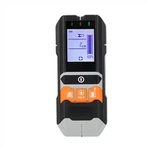
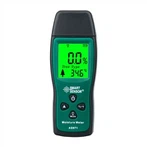
Categorization and measurement standards for determining coating thickness
The covering layer formed to protect and decorate the surface of the material, such as coating, plating, coating, sticking layer, chemically formed film, etc., is called coating in relevant national and international standards.
Coating thickness measurement has become an important part of the quality inspection of the processing industry and surface engineering, and it is an essential means for products to meet high quality standards. In order to make the products internationalized, there are clear requirements for the thickness of the cladding in my country's export commodities and foreign-related projects.
The measurement methods of coating thickness mainly include: wedge cutting method, optical section method, electrolysis method, thickness difference measurement method, weighing method, X-ray fluorescence method, β-ray backscattering method, capacitance method, magnetic measurement method and eddy current measurement law etc. Among these methods, the first five are destructive testing, the measurement methods are cumbersome and slow, and most of them are suitable for sampling inspection.
X-ray and β-ray methods are non-contact and non-destructive measurements, but the devices are complicated and expensive, and the measurement range is small. Due to the radioactive source, users must comply with radiation protection regulations. X-ray method can measure extremely thin coating, double coating and alloy coating. The β-ray method is suitable for the measurement of the coating and the coating with the atomic number of the substrate greater than 3. The capacitance method is only used when measuring the thickness of the insulating coating of a thin conductor.
With the advancement of technology, especially after the introduction of microcomputer technology in recent years, the thickness gauge using magnetic method and eddy current method has taken a step forward in the direction of miniature, intelligent, multi-functional, high-precision and practical. The measurement resolution has reached 0.1 microns, and the accuracy can reach 1%, which has been greatly improved. It has wide application range, wide measuring range, easy operation and low price. It is the most widely used thickness measuring instrument in industry and scientific research.
1. Magnetic attraction measurement principle and thickness gauge
The suction force between the magnet (probe) and the magnetic steel is proportional to the distance between the two, and this distance is the thickness of the cladding. Using this principle to make a thickness gauge, as long as the difference between the magnetic permeability of the coating and the base material is large enough, it can be measured. In view of the fact that most industrial products are stamped and formed by structural steel and hot-rolled cold-rolled steel plates, magnetic thickness gauges are the most widely used. The basic structure of the thickness gauge is composed of magnetic steel, relay spring, scale and self-stop mechanism. After the magnetic steel is attracted to the measured object, the measuring spring is gradually elongated thereafter, and the pulling force is gradually increased. When the pulling force is just greater than the suction force, the thickness of the coating can be obtained by recording the pulling force at the moment when the magnetic steel is detached. Newer products can automate this recording process. Different models have different ranges and applicable occasions.
This instrument is characterized by easy operation, durability, no power supply, no calibration before measurement, and low price. It is very suitable for on-site quality control in workshops.
2. Magnetic induction measurement principle
When the principle of magnetic induction is used, the thickness of the coating is measured by the magnitude of the magnetic flux flowing from the probe through the non-ferromagnetic coating into the ferromagnetic substrate. The size of the corresponding magnetoresistance can also be measured to indicate the thickness of the coating. The thicker the coating, the greater the reluctance and the smaller the flux. The thickness gauge using the principle of magnetic induction can in principle have the thickness of the non-magnetic coating on the magnetic substrate. Generally, the magnetic permeability of the substrate is required to be above 500. If the cladding material is also magnetic, the difference in permeability from the base material is required to be sufficiently large (such as nickel plating on steel). When the probe with the coil wound on the soft core is placed on the sample to be tested, the instrument will automatically output the test current or test signal. Early products used a pointer gauge to measure the magnitude of the induced electromotive force, and the instrument amplified the signal to indicate the coating thickness. In recent years, circuit design has introduced new technologies such as frequency stabilization, phase locking, and temperature compensation, and uses magnetic resistance to modulate measurement signals. It also adopts the newly designed integrated circuit and introduces the microcomputer, so that the measurement accuracy and reproducibility have been greatly improved (almost an order of magnitude). The modern magnetic induction thickness gauge has a resolution of up to 0.1um, an allowable error of 1%, and a range of 10mm.
The magnetic principle thickness gauge can be used to accurately measure the paint layer on the steel surface, porcelain, enamel protective layer, plastic, rubber coating, various non-ferrous metal plating layers including nickel and chromium, and various anti-corrosion coatings for chemical petroleum. coating.
3. Eddy current measurement principle
The high-frequency AC signal generates an electromagnetic field in the probe coil, and when the probe is close to the conductor, eddy currents are formed in it. The closer the probe is to the conductive substrate, the greater the eddy current and the greater the reflection impedance. This amount of feedback characterizes the distance between the probe and the conductive substrate, that is, the thickness of the non-conductive coating on the conductive substrate. Since these probes specialize in measuring the thickness of coatings on non-ferromagnetic metal substrates, they are often referred to as non-magnetic probes. Non-magnetic probes use high-frequency materials as coil cores, such as platinum-nickel alloys or other new materials. Compared with the principle of magnetic induction, the main difference is that the probe is different, the frequency of the signal is different, the size and scale relationship of the signal are different. Like the magnetic induction thickness gauge, the eddy current thickness gauge has also reached a high level of resolution of 0.1um, allowable error of 1%, and range of 10mm.