Causes of Poisoning of the pH Meter Electrode
For flow reference pH meter electrodes, the formation of electrical channels relies on the micro-osmotic pressure of the electrolyte in the electrode, allowing the electrolyte to penetrate into the measurement solution. When the medium pressure or concentration is high, the rehydration channel is not smooth, or there are bubbles, etc., it may hinder the extravasation of the electrolyte and increase the resistance in the middle of the electrical path. If the medium reversely penetrates into the pH meter electrode, it will contaminate the salt bridge or even It may react chemically with the electrolyte or internal electrode (for example, AgCl sulfide→Ag2S) to poison the electrode.
In a strongly oxidizing medium, the loss of alkaline substances (mainly monovalent cations) in the sensitive glass membrane will damage the hydration layer and cause poisoning of the pH meter electrode. Acid-resistant pH meter electrodes can be used. The special process measures (special ion addition formula) used in the manufacturing process enhance the ability of the glass membrane to resist acidosis. At the same time, the zero potential of the electrode corresponds to pH0=2, thus making the acidic range Linearity is corrected.
The pH meter electrode does not have a good linear relationship outside of pH 2 to pH 9. It is easy to form a large amount of hydronium ions H3O in strongly acidic solutions, causing the number of H on the surface of the pH meter electrode to decrease relatively and increase the pH value. Na in a strong alkaline medium will also participate in the exchange process between H in the solution and H on the hydration layer of the electrode, causing the pH meter electrode potential to increase and the ph value to be low.
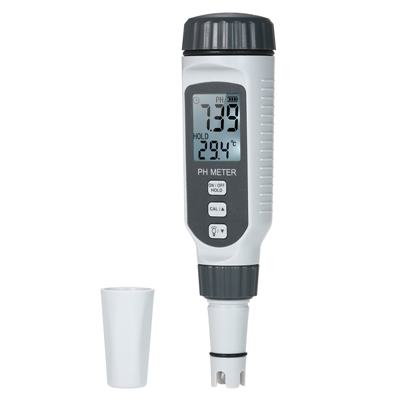
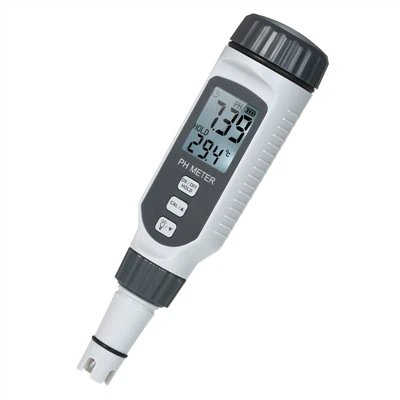
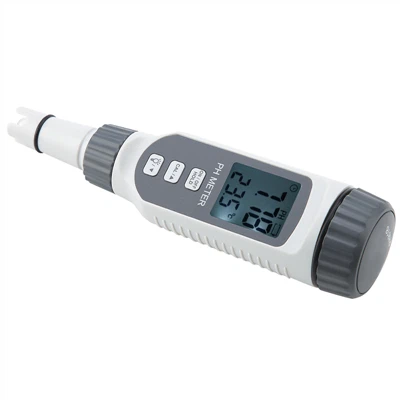
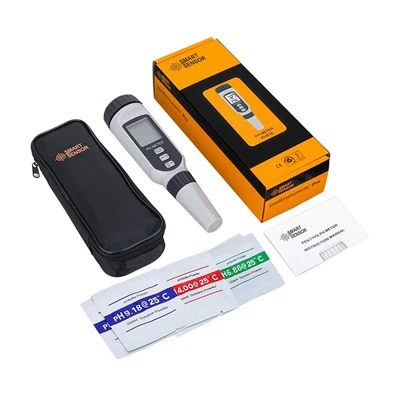
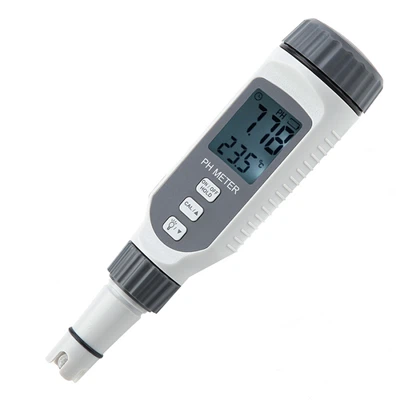
A pH meter, or acidity meter, is an instrument used to measure the pH of a solution. It uses the electrochemical properties of the solution to measure the hydrogen ion concentration to determine the pH of the solution. The negative logarithm of the hydrogen ion concentration is called pH. Usually the pH value is 0 to 14. The pH value of neutral water at 25°C is 7. A solution with a pH value less than 7 is acidic, and a solution with a pH value greater than 7 is alkaline. Temperature has a great influence on the ionization coefficient of water, causing the neutral point of pH value to change with temperature. The principle of pH meter measurement is to use potentiometric analysis to establish the relationship between ion activity and electromotive force, and measure the pH value by measuring the current of the original battery.