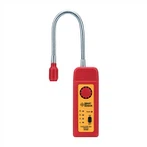
Combustible gas detector application solution
Combustible gas detector application solutions For various production occasions and detection requirements, choosing the appropriate gas detector and combustible gas detector is something that everyone engaged in sanitation and health work must pay great attention to. Here we will introduce some specific situations for your reference.
1: Confirm the type and concentration range of the gas to be detected: The types of gases encountered by each production department are different. When choosing a gas detector it is important to consider all possible scenarios. If there are many methane and other less toxic alkanes, it is undoubtedly the most appropriate to choose the LEL detector. This is not only because the LEL detector has a simple principle and is widely used, but it also has the characteristics of convenient maintenance and calibration. If toxic gases such as carbon monoxide and hydrogen sulfide are present, a specific gas detector must be selected first to ensure the safety of workers. The concentration measured by the poison gas detector based on the electrochemical principle is usually in ppm. If the concentration is more organic toxic and harmful gases, the concentration that may cause poisoning of personnel is considered to be low, such as aromatic hydrocarbons, halogenated hydrocarbons, ammonia (amine), ether , alcohols, lipids, etc., you should choose a photoionization detector instead of a LEL detector, because this may cause casualties. If the gas types cover the above categories of gases, choosing a composite gas detector may achieve twice the result with half the effort.
2: Determine the use occasion: Different industrial environments require different types of gas detectors.
Combustible gas detector application solutions Fixed gas detector: This is a detector commonly used in industrial installations and production processes. It can be installed at specific detection points to detect specific gas leaks. Fixed detectors are generally two-piece. The detection head composed of sensors and transmitters is installed as a whole at the detection site. The secondary instrument composed of circuits, power supplies and display alarm devices is installed as a whole in a safe place for easy monitoring. Its detection principle is the same as that described in the previous section, but its process and technology are more suitable for the continuous and long-term stability required for fixed detection. They should also be selected according to the type and concentration of the on-site gas. At the same time, attention should be paid to installing them in the parts where specific gases are most likely to leak. For example, the most effective height for sensor installation should be selected based on the specific gravity of the gas, etc.