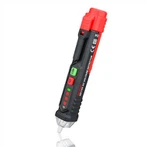
Combustible gas detector principle analysis failure
The principle of the detection part of the combustible gas detector is that the sensor of the instrument uses a detection element, a fixed resistor, and a zero potentiometer to form a detection bridge.
The bridge uses platinum wire as a carrier for catalytic elements. After being powered on, the temperature of the platinum wire rises to the working temperature, and air reaches the surface of the element through natural diffusion or other means. When there is no combustible gas in the air, the bridge output is zero. When the air contains combustible gas and diffuses onto the detection element, flameless combustion occurs due to catalytic action, causing the temperature of the detection element to rise and the platinum wire resistance to increase, causing the bridge circuit to lose balance. As a result, a voltage signal is output, which is proportional to the concentration of combustible gas. The signal is amplified, analog-to-digital converted, and displayed on a liquid display to show the concentration of combustible gas.
The principle of the detection part is that when the concentration of the combustible gas being measured exceeds the limit value, the amplified bridge circuit outputs a voltage and the circuit detection set voltage. Through the voltage comparator, the square wave generator outputs a set of square wave signals to control the sound and light detection circuit. The buzzer produces continuous sound, and the light-emitting diode flashes to emit a detection signal.
We need to pay attention to the following aspects when using a combustible gas detector:
1) The first step in using a combustible gas detector is to identify the leakage points of the device, analyze their leakage direction, pressure, and other factors. At the same time, draw a distribution map of their probe positions, and classify them into three levels based on the severity of the leakage: level I, level II, and level III.
2) Based on the density of the leaked gas and the trend of air flow, a three-dimensional flow trend chart of the leak is synthesized, and an initial setting plan is made at the downstream position of its flow.
3) Based on specific factors such as wind direction and airflow direction in the location, determine the direction of combustible gas leakage in case of a large amount of leakage.
4) Study whether the leakage state of the leakage point is micro leakage or jet like. If it is a minor leak, the location of the point should be closer to the leak point. If it is in a jet shape, it should be slightly away from the leakage point. Taking into account these factors, a final plan for setting up the site has been formulated. In this way, the quantity and variety that need to be purchased can be estimated.
5) For locations with hydrogen gas leaks, detectors should be installed on a flat surface above the leak point.
6) If there is a possibility of significant combustible gas leakage in the premises, a detection point should be set up every 10-20m according to relevant regulations. For small and discontinuous pump rooms, attention should be paid to the possibility of combustible gas leakage, and a detector should be installed at the lower air outlet.
7) For open environments where combustible gases diffuse and escape, the lack of good ventilation conditions can easily cause the combustible gas content in a certain part of the air to approach or reach the lower explosive limit concentration, which cannot be ignored.
8) When using a combustible gas detector for media with a gas density greater than air, the detector should be installed on a plane below the leakage point, while paying attention to the characteristics of the surrounding environment.