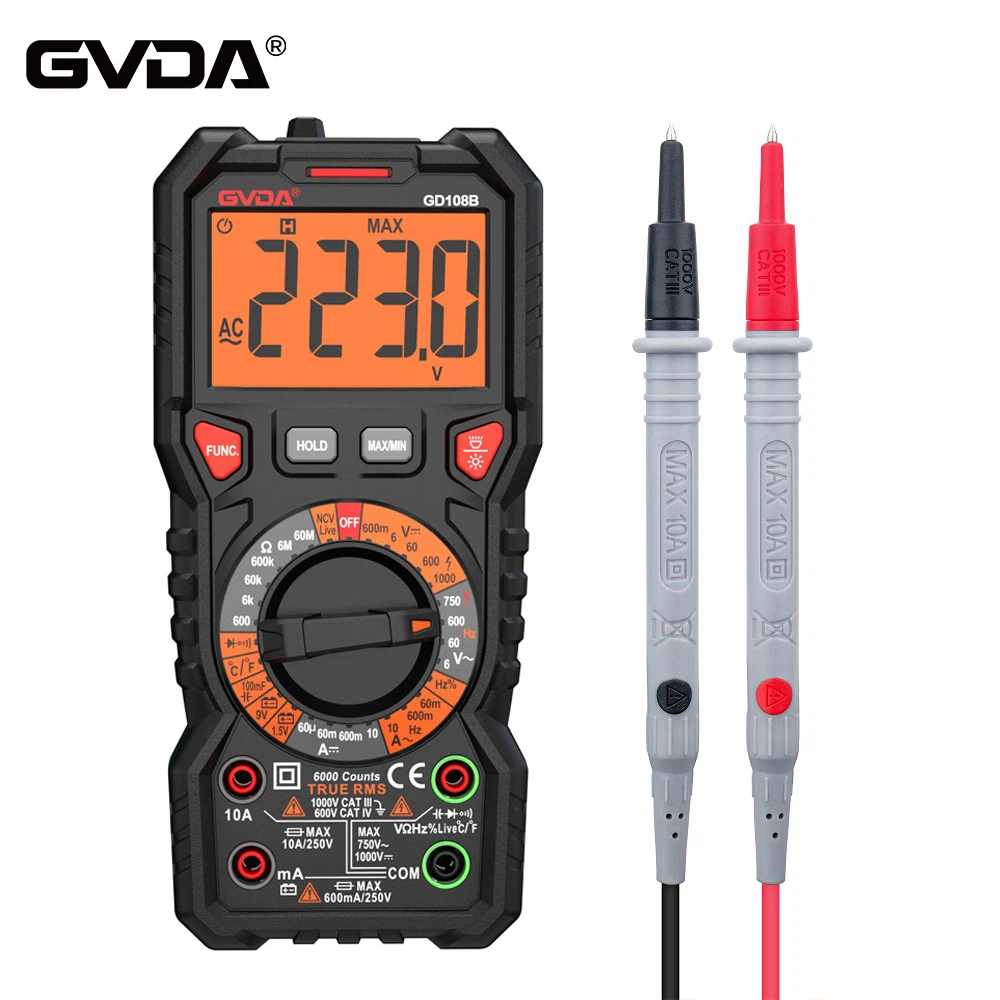
Common methods for measuring leakage with a multimeter
Requirements: Use the on-off setting of the multimeter to measure the ground and circuit parts to be measured, and check whether there is a resistance value on the meter to determine whether it is leakage or insulation.
Insert the multimeter connector into the corresponding terminal for measuring AC, then use one pen to measure the neutral or ground wire, and the other pen to measure the suspected leakage point. Look at the value displayed on the multimeter. If it is 0, it means there is no leakage or voltage. . If it is 220 or other voltage readings exceeding 36V, it means there is leakage here.
Use the multimeter resistance range 200M to measure the insulation resistance. First determine which wire is leaking or which two wires are short-circuited.
Measurement methods:
Measure the insulation resistance of the live wire and the neutral wire, measure the insulation resistance of the live wire to the ground wire, and measure the insulation resistance of the neutral wire to the ground wire. If there is a short circuit the insulation resistance is basically zero.
I know which wire is leaking, and I'm using the segmented search method to gradually narrow down the scope of the fault. Or use the elimination method to separate the lines and conduct energization tests section by section.
Precautions:
To measure whether there is leakage in the circuit, a megohmmeter, also known as a megger, is generally used.
When measuring with a multimeter, the voltage at both ends of the test leads is very low, generally no more than 9v, and cannot break through the gap for leakage, while the megohmmeter can reach more than 1000v.
How to quickly check for electrical leakage in home circuits
Turn off the input switch, unplug all electrical appliances, and measure the resistance of the live wire, neutral wire, and live wire and ground wire to be more than 1 megabyte, which means the line insulation is good.
Determine the leakage situation based on the measurement results: 500K to 1M ohm is general insulation, 10k to 200K is mild leakage, and below 7K ohm is severe leakage, which will cause the leakage protector to trip.
The megohmmeter, also known as the megohmmeter, cuts off the power to the line when measuring, and uses the megohmmeter to shake it directly.
A 500V megger can be used for low-voltage circuits. Measured against the ground, if the insulation is less than 0.5 megohm, it means the insulation is not very good and needs to be checked section by section.
Note: When measuring with a megometer, no electrical appliances can be connected to the circuit to ensure the accuracy of the measured values.
The national standard determines that 30 mA or more is the initial protection value, that is, when a current of 30 mA or more flows through the heart during an electric shock, an electric shock will occur and be life-threatening.
Be sure to check whether a leakage protector is installed, and it must be installed at the front end of the incoming line. It is usually checked once a month to ensure that the protector can work properly.
Inspection method: Press the test button to trip immediately. If there is no response, it needs to be replaced immediately.