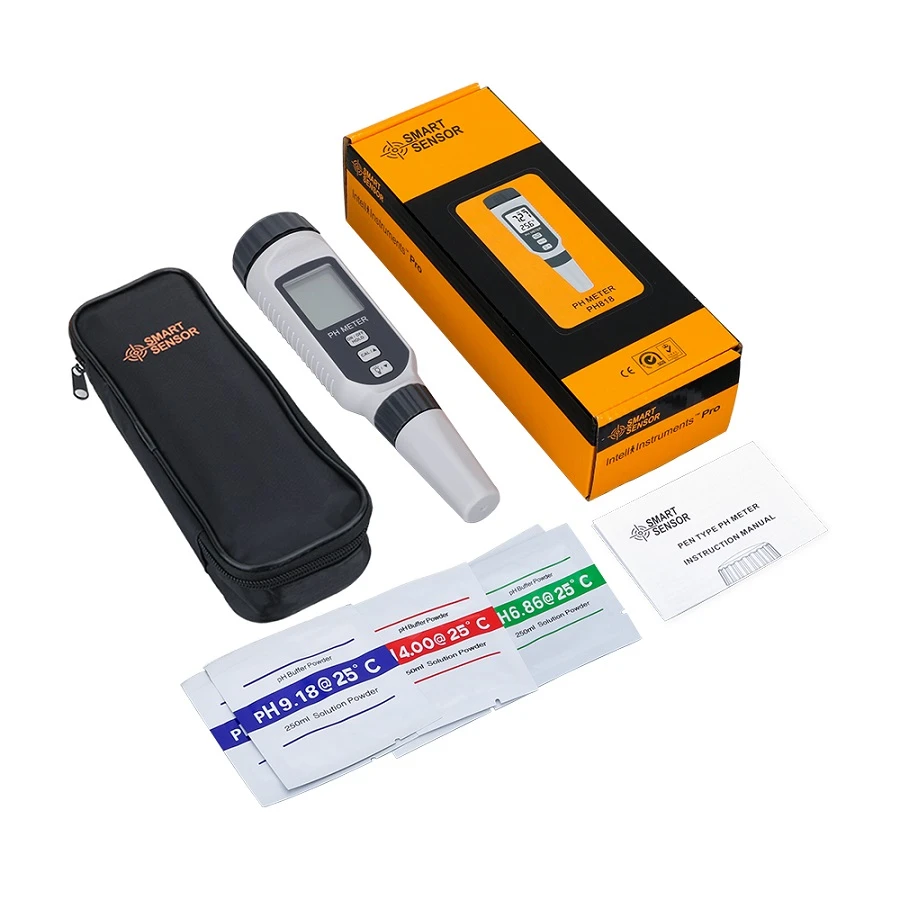
Definition of Two-Point Calibration for pH Meters
For precision-grade pH meters, besides the "positioning" and "temperature compensation" adjustments, an electrode "slope" adjustment is also provided. Therefore, two types of standard buffer solutions are required for calibration. Generally, "positioning" calibration is first performed with pH 4.01 or pH 7.00 buffer solution. Then, "slope" calibration is carried out using pH 4.01 (for acidic samples) or pH 9.21 / pH 10.01 (for alkaline samples) buffer solution according to the acidity or alkalinity of the test solution. The specific operating procedures are as follows:
(1) Rinse the electrode thoroughly and shake off excess water. Immerse it in the pH 4.01 or pH 7.00 standard solution, and set the instrument's temperature compensation knob to match the solution temperature. After the reading stabilizes, adjust the positioning knob so that the instrument reading equals the pH value of the standard solution.
(2) Take out the electrode, rinse it and shake off excess water. Immerse it in the second standard solution. Once the reading stabilizes, adjust the slope knob of the instrument to make the displayed value equal to the pH value of the second standard solution.
(3) Remove the electrode, rinse and shake it dry, then immerse it again in the pH 4.01 or pH 7.00 buffer solution. If the error exceeds 0.02 pH, repeat steps (1) and (2) until the instrument shows the correct pH values for both standard solutions without further knob adjustment.
(4) Take out the electrode and shake off water. Adjust the pH temperature compensation knob to the temperature of the sample solution. Immerse the electrode into the sample solution, agitate and let it stand still. Take the reading after the display stabilizes.