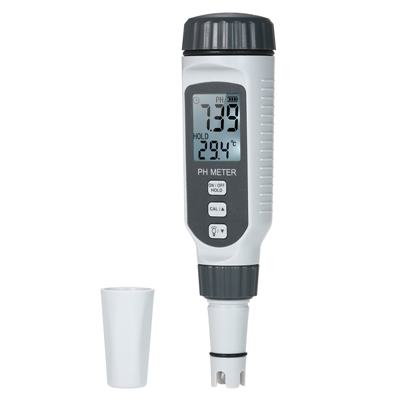
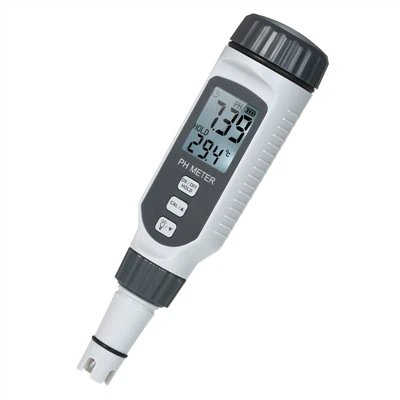
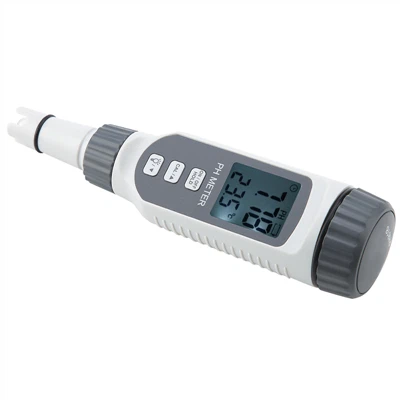
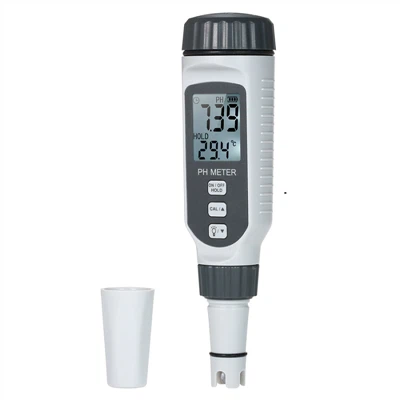
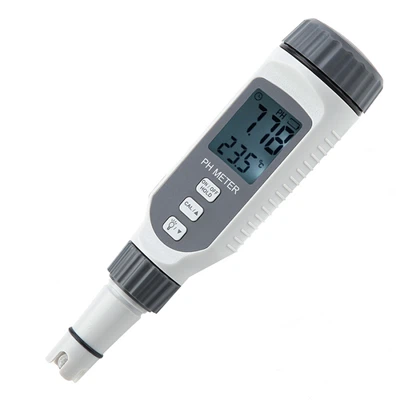
Detailed explanation of the structure principle and routine maintenance of ph meter
To determine the pH value of a solution, a pH meter is industrially constructed using the potentiometric principle, which consists of a transmitting section composed of pH electrodes and a detecting section composed of electronic components. The transmitting section consists of a reference pH electrode and a working pH electrode. When the measured solution flows through the sending part, the pH electrode and the measured solution form a chemical primary cell, and an electric potential is generated between the two pH electrodes, the size of which is logarithmically related to the pH value of the measured solution. Therefore, the transmitting part is a converter, which converts the pH value of the measured solution into an electrical signal.
Principle of pH meter
By determining the potential difference between the electrode and the reference electrode in the working cell in the solution, and using the pH value of the solution to be measured and the size of the potential of the working cell of the linear relationship, and then through the ammeter converted to pH unit value to achieve the measurement.
Maintenance of pH meter
1. pH meter glass electrode storage
When the pH meter is not used for a short period of time, it can be fully immersed in saturated potassium chloride solution. However, if it is not used for a long period of time, it should be placed in a dry place, and should not be washed with washing liquid or other water-absorbent reagents.
2. Cleaning of pH glass electrode
Contamination of the glass electrode bulb may lengthen the response time of the electrode. CCl4 or soap solution can be used to wipe off the dirt, and then immersed in distilled water for a day and night and continue to use. If the contamination is serious, use 5% HF solution to soak for 10-20 minutes, immediately rinse with water, and then soak in 0.1N HCl solution for one day and one night before continuing to use. 3.
3. Treatment of aging glass electrode
The aging of the glass electrode is related to the gradual change of the structure of the gel layer. The old electrode has a sluggish response, high film resistance and low slope. Etching away the outer gel layer with hydrofluoric acid often improves electrode performance. If the inner and outer gel layers can be removed regularly by this method, the life of the electrode is almost unlimited.
4. Storage of reference electrodes
The best storage solution for silver-silver chloride electrodes is saturated potassium chloride solution. A high concentration of potassium chloride solution prevents silver chloride from precipitating at the liquid junction and maintains the liquid junction in working condition. This method is also applicable to the storage of composite electrodes.